
As an Amazon Associate I earn from qualifying purchases and sometimes recommend products from other sellers at no extra cost to you. For more details see my disclosure policy and privacy policy.
Swapping sugar in a baking recipe is never as simple as pouring in the same amount of something else. Sugar does more work in a bake than just sweetening it: it holds moisture, helps browning, and gives structure to everything from cookies to cakes. This guide covers the most common sugar substitutes, exactly how much of each to use in place of sugar, and where each one tends to fall short so you’re not guessing.
None of these are truly 1:1 with sugar, even when the packaging says so. Treat every ratio below as a solid starting point rather than a guarantee, and expect to adjust slightly the first time you try a substitute in a recipe you know well.
Comparison and Conversion Chart
| Substitute | Sweetness vs. Sugar | Conversion Ratio | Best For |
|---|---|---|---|
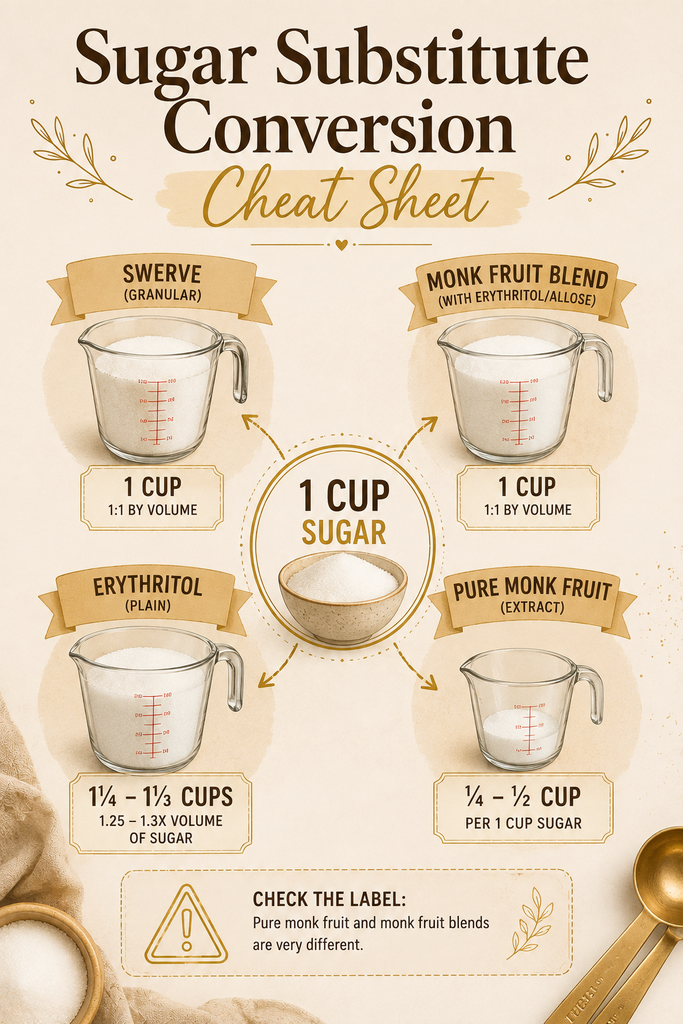
| Swerve (granular) | Roughly equal | 1:1 by volume | Cookies, bars, most everyday bakes |
| Monk fruit blend (with erythritol/allulose) | Roughly equal | 1:1 by volume | Cakes, cookies, general substitution |
| Pure monk fruit extract | Much sweeter than sugar | 1/4 to 1/2 cup per 1 cup sugar | Small-batch bakes where bulk isn’t critical |
| Erythritol (plain) | Slightly less sweet | 1.25-1.3x volume of sugar | Cookies, bars; watch for a cooling aftertaste |
| Stevia (concentrated) | Much sweeter than sugar | A fraction of the sugar volume, plus extra liquid | Recipes where sugar’s bulk isn’t structurally important |
What Each Substitute Actually Is
Swerve is a blend of erythritol and oligosaccharides (plant fibres), built specifically to behave like sugar cup for cup. It’s one of the more forgiving substitutes for that reason, since you generally don’t need to recalculate your whole recipe to use it.
Monk fruit sweeteners come in two very different forms, and this is where a lot of baking substitution confusion starts. Blended monk fruit products (mixed with erythritol or allulose) are designed for a 1:1 swap and behave close to sugar. Pure monk fruit extract, on the other hand, is intensely concentrated and only needs a quarter to a half of the sugar volume to match sweetness, so check which type you actually have before measuring.
Erythritol on its own needs roughly 1.25 to 1.3 times the volume of sugar to taste equally sweet, since it’s slightly less sweet gram for gram. It can also crystallise as a bake cools, which sometimes shows up as a faint gritty texture, and some people notice a cooling aftertaste at higher concentrations.
Stevia is the outlier on this list. It’s so concentrated that you’ll use only a small fraction of the sugar volume by weight, which means it contributes essentially none of sugar’s bulk, moisture, or browning power to a recipe. Because of that gap, recipes using stevia typically need extra liquid added elsewhere to compensate for what sugar would otherwise have provided.
Texture, Browning, and Moisture Effects
This is the part packaging rarely mentions, and it’s the actual reason a swap can go wrong even at the “right” ratio.
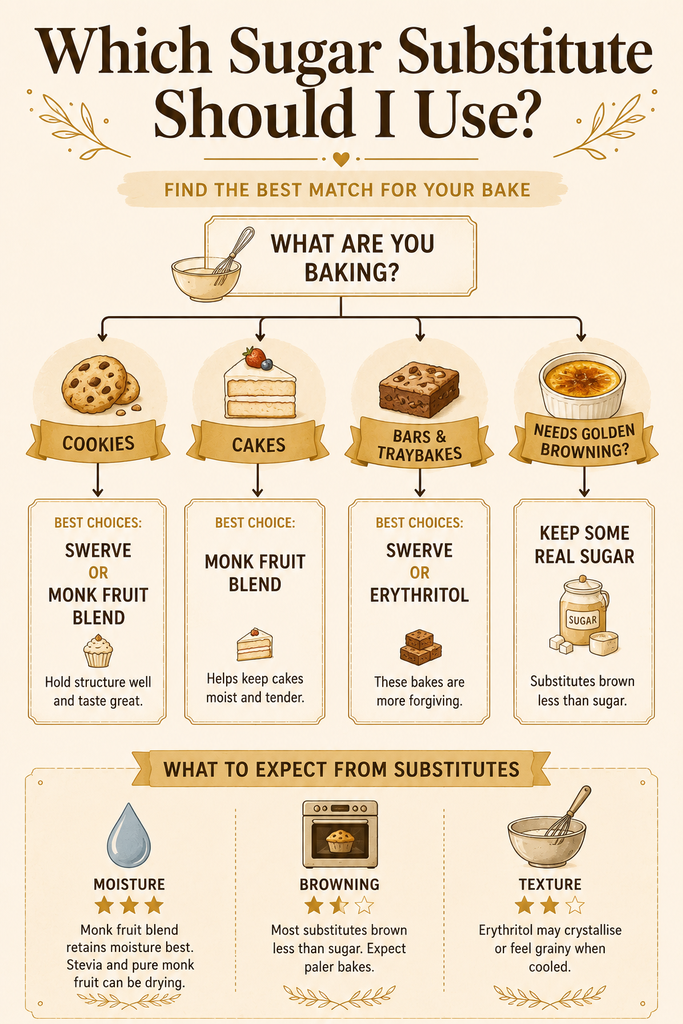
- Browning: Sugar caramelises and contributes to the Maillard reaction that gives baked goods their golden colour. Most substitutes brown less than sugar does, so cookies and cakes made with substitutes often come out paler even when fully baked, which isn’t the same as underbaked.
- Moisture: Sugar is hygroscopic, meaning it holds onto water and keeps bakes moist over time. Substitutes without that same property, particularly stevia and pure monk fruit extract, can leave a finished bake drier and staling faster.
- Texture: Erythritol-based substitutes are more prone to a slightly grainy or crystallised texture once cooled, especially in anything with a smooth mouthfeel like a custard or a glaze. Swerve and blended monk fruit products tend to hold texture closer to sugar than plain erythritol does.
Best Use Cases Per Substitute
- Cookies: Swerve or a monk fruit blend are the safest choices, since both hold structure reasonably close to sugar and the slight texture differences are less noticeable in a cookie than in something delicate.
- Cakes: A monk fruit blend tends to perform best here, since cakes rely more heavily on sugar’s moisture-retention than cookies do, and pure erythritol’s drying effect is more obvious in a cake crumb.
- Bars and traybakes: Erythritol or Swerve both work well, since these bakes are generally more forgiving of small texture shifts than a delicate cake.
- Anything relying on caramelisation (think a classic sponge cake’s golden top, or a caramelised bar topping): none of these substitutes will get you there fully. If browning is important to the finished look, expect to compensate with a slightly longer bake or a light egg wash rather than relying on the substitute to brown the way sugar does.
Blending Strategies to Offset Weaknesses
Combining two substitutes, or combining a substitute with a small amount of real sugar, often gets closer results than using any single one alone. A common approach is using roughly 75% Swerve or monk fruit blend with 25% real sugar, which keeps most of the sugar reduction while still getting some real browning and moisture from the portion of sugar that remains.
If a recipe already leans dry (many lower-sugar recipes do), adding a tablespoon or two of extra liquid, like milk or a neutral oil, per cup of substitute used helps offset what the substitute isn’t contributing on its own.
For a broader look at swapping other baking staples beyond sugar, our baking substitutions guide covers flour, eggs, and dairy alternatives using the same kind of practical, ratio-first approach.
A Note on Measuring
Because these substitutes don’t all measure the same as sugar by volume, getting the ratio right matters more here than in most baking swaps. Our guide on how to measure baking ingredients correctly is worth a look if you’re not already measuring by weight, since a scale removes a lot of the guesswork that trips people up with sugar substitutes specifically.


