As an Amazon Associate I earn from qualifying purchases and sometimes recommend products from other sellers at no extra cost to you. For more details see my disclosure policy and privacy policy.
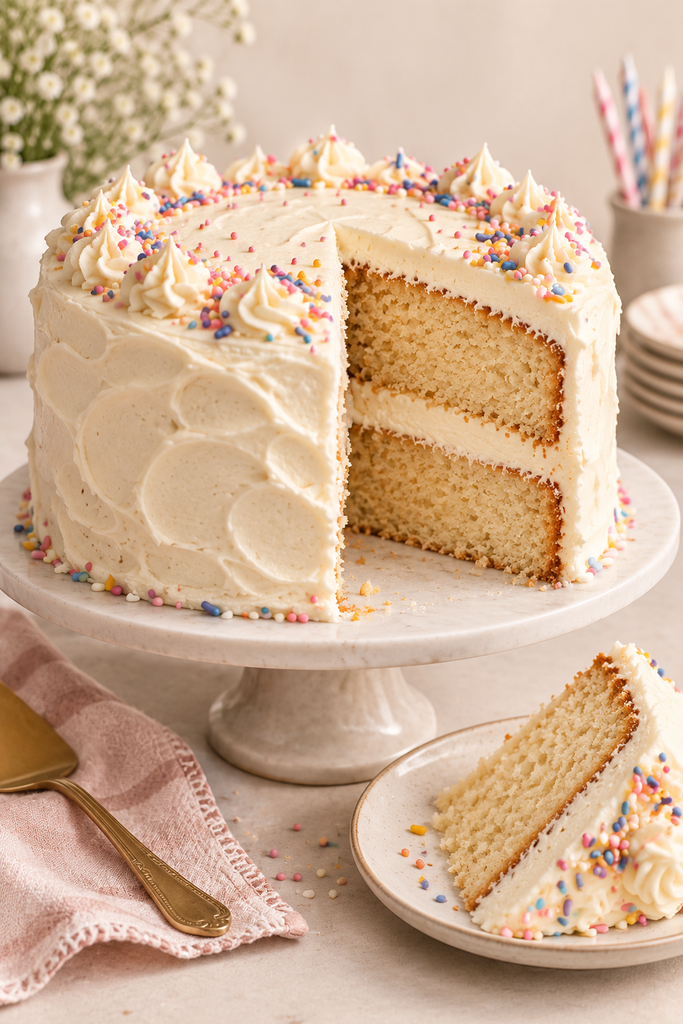
Birthdays have a way of making sugar-free baking feel more fraught than it needs to be. You want the candles, the layers, the bit where everyone leans in for a photo before the first slice disappears, but if you or someone at the table is watching their sugar intake, a shop-bought cake usually isn’t an option and a lot of homemade “diabetic-friendly” recipes turn out dry, dense, or oddly metallic-tasting. This vanilla birthday cake was built to solve that specific problem. It’s soft, properly moist, and holds up under a good layer of frosting, so the only thing anyone at the party will notice is that it’s cake.
It’s also deliberately a year-round cake rather than a seasonal one. If you’re after something for the holidays, the sugar-free Christmas cake on this site already covers that occasion; this recipe is for the birthdays, the “just because” celebrations, and the Tuesdays that need a bit of cake in them.
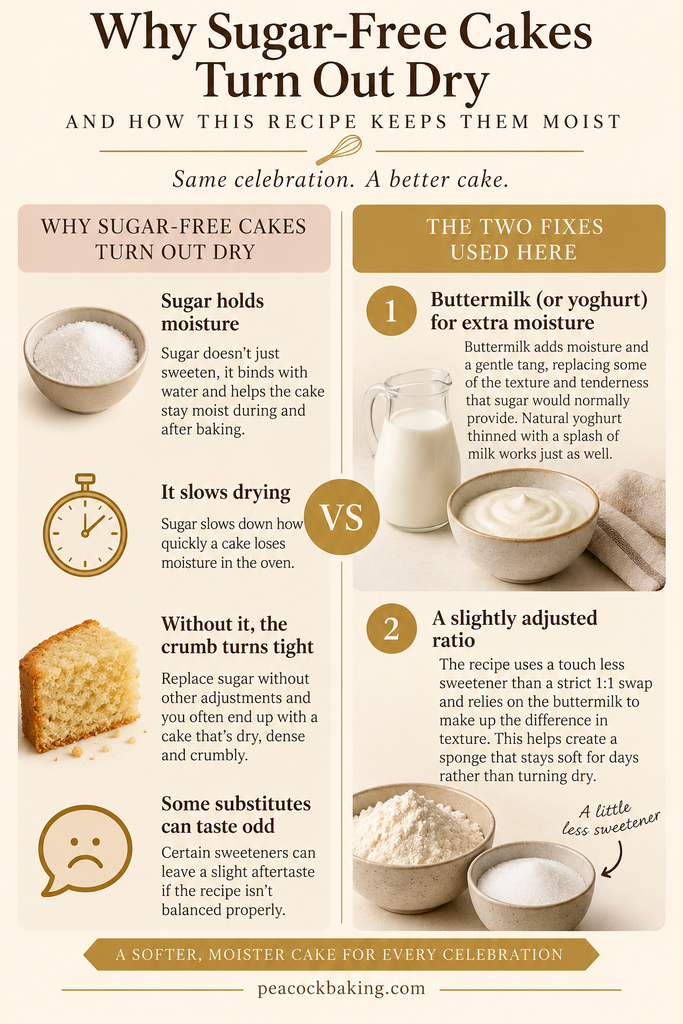
🎂 Why Sugar Substitute Cakes Turn Out Dry (And How This One Doesn’t)
The single biggest complaint about sugar-free bakes is dryness, and it comes down to what sugar actually does in a cake beyond sweetness. Sugar holds onto moisture and slows down how quickly a bake dries out in the oven, so when you take it out, you have to put that moisture back some other way or the crumb turns tight and crumbly.
This recipe fixes that in two ways. First, buttermilk (or natural yoghurt if that’s what you have) goes in instead of plain milk, adding both moisture and a gentle tang that balances out the sweetener. Second, the ratio of substitute to flour is slightly adjusted from a standard sugar recipe, using a touch less than a strict 1:1 swap and leaning on the buttermilk to make up the difference in texture. The result is a sponge that stays soft for days rather than turning to sawdust by the second slice.
🍯 Choosing Your Sugar Substitute
For this cake, a granulated 1:1 sugar substitute blend built on erythritol or monk fruit is the easiest option, since it measures and creams just like sugar with no recipe maths required. If you want a slightly softer, moister crumb and don’t mind a bit of trial and error, a blend that uses allulose as its bulking agent holds moisture even more effectively and is worth trying once you’ve made the recipe as written the first time.
Either way, this post isn’t the place for a full sweetener comparison; if you want the detail on how each type behaves, converts, and tastes, the Ultimate Guide to Sugar Substitutes covers it properly.
🧈 What You’ll Need
- Self-raising flour – gives the sponge its lift without needing separate raising agents measured out.
- Granulated sugar substitute – see above; measure it exactly as you would sugar.
- Unsalted butter, softened – for a rounded, properly buttery flavour that sugar substitutes on their own can sometimes lack.
- Buttermilk – the moisture fix. Natural yoghurt thinned with a splash of milk works as a swap.
- Eggs – at room temperature, so they incorporate smoothly rather than curdling the batter.
- Vanilla extract – use a good one, since it’s doing extra flavour work here.
- Baking powder – a little extra insurance for a good rise, on top of the self-raising flour.
- Pinch of salt – balances the sweetness and sharpens the vanilla.
👩🍳 Method
- Heat your oven to 175°C (155°C fan) and grease and line two 20cm round cake tins.
- Cream the softened butter and sugar substitute together for a full 3-4 minutes, until noticeably paler and fluffy. Don’t rush this step; it’s doing a lot of the work sugar would normally do for texture.
- Beat in the eggs one at a time, adding a spoonful of the flour with the last egg if the mixture looks like it’s about to curdle.
- Fold in the vanilla extract, then gently fold in the flour, baking powder, and salt in two batches, alternating with the buttermilk, until just combined.
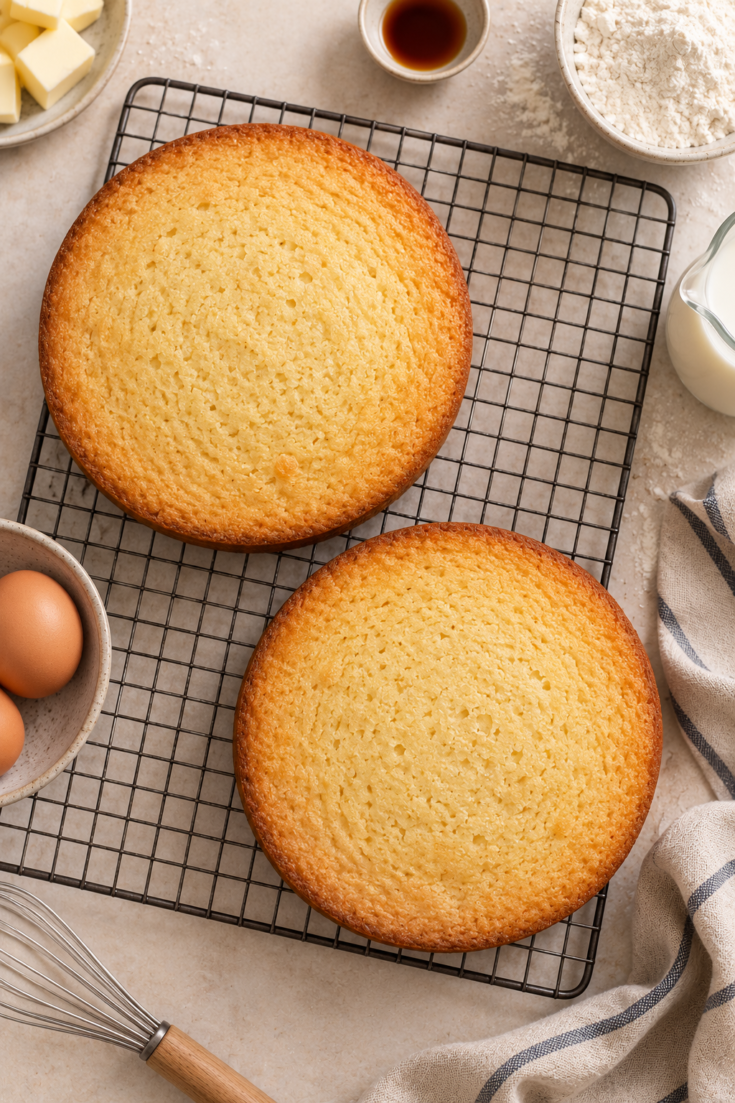
- Divide the batter evenly between the tins and bake for 25-30 minutes, until a skewer comes out clean and the sponge springs back when pressed.
- Cool in the tins for 10 minutes, then turn out onto a wire rack to cool completely before frosting.
🍰 A Simple Lower-Sugar Frosting
For the frosting, beat softened butter with a powdered (icing-style) sugar substitute until smooth, adding a splash of vanilla and just enough milk to loosen it to a spreadable consistency. It won’t whip up quite as glossy as a traditional buttercream, since powdered substitutes don’t dissolve identically to icing sugar, but it holds its shape well enough for a proper birthday layer cake and pipes reasonably cleanly if you’re decorating.
📦 Make-Ahead, Storage, and Freezing
The sponges can be baked up to two days ahead; wrap them individually in cling film once fully cool and keep at room temperature, then frost on the day. Once frosted, store the cake in an airtight container in the fridge for up to four days, bringing it back to room temperature before serving so the crumb doesn’t taste tight and cold. The unfrosted sponges also freeze well for up to two months; wrap tightly and defrost overnight in the fridge before frosting.
🍽️ A Note on Portions
This cake is written to be genuinely enjoyable rather than a compromise, which also means it’s worth thinking about slice size if you or a guest are managing blood sugar carefully. Cutting it into 12 smaller slices rather than 8 generous ones is an easy, no-fuss way to keep portions sensible without anyone feeling like they’re missing out on the occasion.
As always, if sugar substitutes are new for you or you’re baking for someone managing diabetes, it’s worth checking in with a GP or dietitian about what fits their particular plan.
🎉 Decorating and Serving Ideas
This sponge is plain vanilla on purpose, so it takes decoration well without fighting for attention. A ring of fresh berries around the top edge dresses it up in seconds, or a light dusting of powdered sugar substitute keeps things simple for a weeknight birthday. If you’re piping the frosting, a large open star nozzle gives a generous, homely finish that hides small imperfections better than a smooth palette-knife coat. For a child’s birthday, sprinkles stirred into the frosting itself add colour without adding another sweetener source to think about.
Serve it as you would any layer cake, at room temperature rather than straight from the fridge; a cold, dense fridge-straight slice is one of the easiest ways to make any bake taste worse than it is. Give it twenty to thirty minutes on the counter after removing your frosted slices and the crumb softens right back up.
❓ Recipe FAQs
Can I make this ahead of time? Yes. Bake the sponges up to two days in advance and store them wrapped at room temperature, then frost close to serving for the best texture.
Can I freeze this cake? The unfrosted sponge freezes well for up to two months. It’s best to freeze before frosting and add the buttercream after defrosting.
Can I turn this into cupcakes instead? Yes, the batter works well as cupcakes. Divide between a lined 12-hole tray and reduce the bake time to around 18-20 minutes, checking with a skewer.
Why did my cake still turn out slightly dense? This is almost always down to under-creaming the butter and sugar substitute at the start, or overmixing once the flour goes in. Give the creaming step the full few minutes and fold the dry ingredients in gently.
Sugar-Free Birthday Cake
A moist, tender vanilla layer cake made with a sugar substitute, using a buttermilk-based fix for the dryness that usually plagues sugar-free bakes.
Ingredients
Ingredients — Cake:
- 225g (1 cup) unsalted butter, softened
- 225g (1 cup) granulated 1:1 sugar substitute (erythritol or monk fruit blend)
- 4 large eggs, room temperature
- 2 tsp vanilla extract
- 225g (1¾ cups) self-raising flour
- 1 tsp baking powder
- ¼ tsp salt
- 150ml (⅔ cup) buttermilk
Ingredients — Frosting:
- 250g (1 cup) unsalted butter, softened
- 500g (4 cups) powdered/icing-style sugar substitute
- 1 tsp vanilla extract
- 2-3 tbsp milk (as needed for consistency)
Instructions
- Heat oven to 175°C (155°C fan)/350°F. Grease and line two 20cm round cake tins.
- Cream butter and sugar substitute together for 3-4 minutes until pale and fluffy.
- Beat in eggs one at a time, adding a spoonful of flour with the last egg if the mixture looks like it's curdling.
- Fold in vanilla, then fold in flour, baking powder, and salt in two batches, alternating with the buttermilk, until just combined.
- Divide batter evenly between the tins. Bake 25-30 minutes, until a skewer comes out clean.
- Cool in tins 10 minutes, then turn out onto a wire rack to cool completely.
- For the frosting, beat butter until smooth, then gradually add powdered sugar substitute, vanilla, and enough milk to reach a spreadable consistency.
- Once sponges are fully cool, frost between layers and over the top and sides.
Notes
Nutrition Information:
Yield:
12Serving Size:
1Amount Per Serving: Calories: 614Total Fat: 34gSaturated Fat: 21gUnsaturated Fat: 13gCholesterol: 148mgSodium: 164mgCarbohydrates: 77gFiber: 1gSugar: 73gProtein: 4g