As an Amazon Associate I earn from qualifying purchases and sometimes recommend products from other sellers at no extra cost to you. For more details see my disclosure policy and privacy policy.
Cutting back on sugar does not mean giving up cookies. This recipe swaps out the sugar but keeps everything else the same, so you still end up with a properly soft, chewy chocolate chip cookie rather than something that tastes like a health food experiment.
We tested this one with a granulated erythritol and monk fruit blend, which is the substitute that holds up best in a cookie dough. Below, we cover which sugar substitute to reach for, exactly how to keep these soft, why sugar-free chocolate chips behave a little differently in the oven, and how to store them so they do not dry out.

🍬 Which Sugar Substitute Actually Works Here
Not every sugar substitute bakes the same way. Sugar helps cookies spread and go crisp at the edges, so swapping it out changes the texture more than most recipes let on.
A granulated erythritol and monk fruit blend is the best all-rounder for chocolate chip cookies. It has a clean, sugar-like taste without the bitter aftertaste some stevia blends leave behind, and it creates enough structure to hold a cookie shape.
Straight stevia or monk fruit extract on their own tend to be too concentrated and can leave a cooling or metallic note. If you want the full rundown on how different substitutes behave in baking, our guide to sugar substitutes covers ratios and swaps for other bakes too.
One practical note: erythritol blends are slightly less sweet by volume than sugar, so most bakers use around 1¼ cups of blend for every cup of sugar a recipe calls for. We have already built that into the measurements below.
🥣 What You Will Need
This makes about 20 cookies.
- 280g (2¼ cups) plain flour
- ½ tsp bicarbonate of soda
- ½ tsp salt
- 170g unsalted butter, softened
- 250g (1¼ cups) granulated erythritol or monk fruit baking blend
- 1 large egg
- 1 tsp vanilla extract
- 1 to 2 tbsp whole milk
- 200g sugar-free chocolate chips
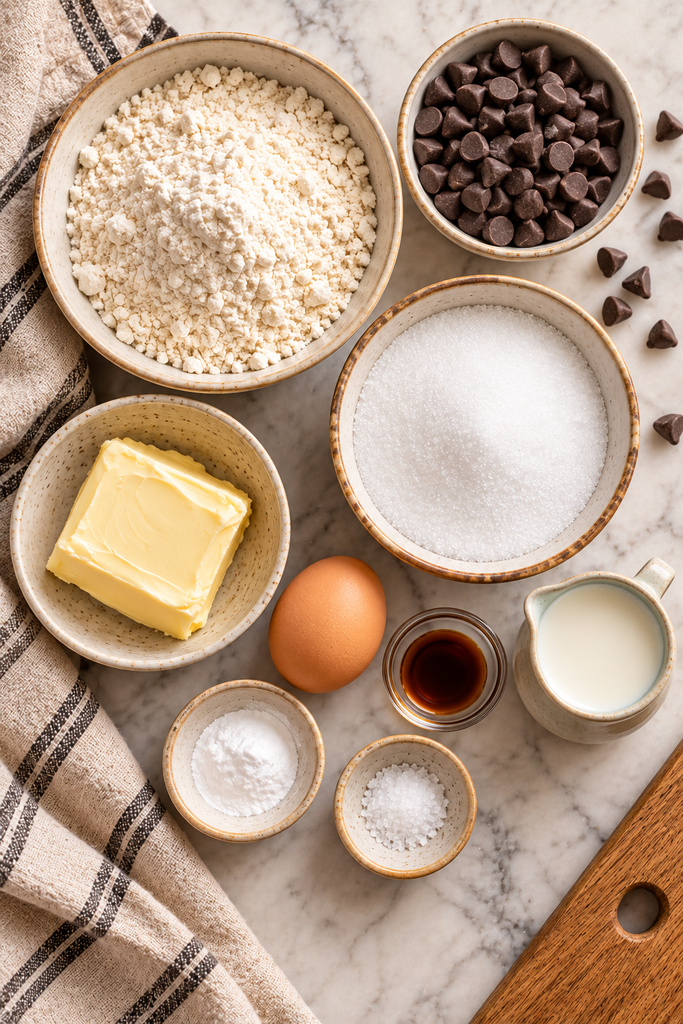
The extra splash of milk is not optional here. Sugar holds onto moisture as cookies bake, and a sugar substitute cannot do that job on its own, so the milk helps stop the dough from baking up dry.
👩🍳 Step by Step
- Cream the softened butter and sweetener blend together until light and fluffy, about 2 minutes with an electric mixer.
- Beat in the egg and vanilla extract until fully combined.
- Add the milk and mix briefly. The dough will look slightly looser than a standard cookie dough at this stage, which is normal.
- In a separate bowl, whisk the flour, bicarbonate of soda, and salt together.
- Fold the dry ingredients into the wet mixture until just combined, then fold in the sugar-free chocolate chips.
- Chill the dough for at least 30 minutes. This matters more than usual here, because these cookies spread less predictably than sugar-based dough, and a cold dough gives you far more control over the final shape.
- Preheat your oven to 180°C (160°C fan). Scoop the dough into balls of about 2 tablespoons each and space them well apart on a lined baking tray.
- Bake for 10 to 12 minutes, until the edges look set but the centres still look slightly underdone. They firm up as they cool.
- Leave the cookies on the tray for 5 minutes before moving them to a wire rack, since they are fragile straight out of the oven.
🍫 Why Sugar-Free Chocolate Chips Bake Differently
Sugar-free chocolate chips melt more slowly than regular ones and scorch more easily if the oven runs even slightly hot. Without sugar’s help, they also do not always melt as smoothly, and can turn slightly grainy if overheated.
A couple of small adjustments make a real difference here. Fold the chips in gently rather than overmixing, and if your oven tends to run hot, check the cookies a minute or two before the timer ends.
For the chips themselves, look for a brand made specifically for baking rather than snacking, since baking chips are formulated to hold their shape better under heat. (We’re still sourcing our top recommendation here, so check back or ask us for our current pick.)
🧊 Storing Them So They Stay Soft
Sugar substitutes do not hold moisture the way real sugar does, which means these cookies can dry out faster than a standard batch if you are not careful.
- At room temperature: keep them in an airtight container for up to 4 days. Adding a slice of bread to the container helps keep them soft, since the cookies draw moisture from it instead of drying out.
- In the freezer: these freeze well for up to 2 months, either baked or as unbaked dough balls ready to bake from frozen (just add 1 to 2 minutes to the bake time).
🛠️ Troubleshooting
- Cookies spread too much: your butter or dough was too warm. Chill the dough for longer next time, and make sure your butter is softened, not melted.
- Cookies did not spread at all: this usually means too much flour was packed into the measuring cup. Weigh your flour with a digital kitchen scale rather than scooping it, for a much more consistent result.

- Slightly grainy texture: this is usually the sweetener recrystallising as the cookies cool. It is more noticeable in erythritol blends than monk fruit blends, so try switching brands if it bothers you.
- Cookies taste dry: add the extra tablespoon of milk next time, and avoid overbaking, since these firm up a lot as they cool even when they still look a little soft in the middle.
If you would rather keep the flour and swap out something else entirely, our Coconut Flour Chocolate Chip Cookies take a different approach and lean lower carb through the flour instead of the sugar.
🛒 A Couple of Things That Help
For the sweetener itself, we use a granulated monk fruit and erythritol blend built for baking rather than a tabletop sweetener, since it measures and creams much closer to real sugar. If you bake often, a digital kitchen scale is genuinely one of the cheapest upgrades you can make to your baking, especially for recipes like this one where the ratios matter more than usual.

Sugar-Free Chocolate Chip Cookies (Soft and Chewy)
Soft, chewy chocolate chip cookies made with a granulated monk fruit and erythritol blend instead of sugar. No compromise on texture, just a few adjustments to keep them from drying out.
Ingredients
- 280g (2¼ cups) plain flour
- ½ tsp bicarbonate of soda
- ½ tsp salt
- 170g unsalted butter, softened
- 250g (1¼ cups) granulated erythritol or monk fruit baking blend
- 1 large egg
- 1 tsp vanilla extract
- 1–2 tbsp whole milk
- 200g sugar-free chocolate chips
Instructions
- Cream the softened butter and sweetener blend together until light and fluffy, about 2 minutes with an electric mixer.
- Beat in the egg and vanilla extract until fully combined.
- Add the milk and mix briefly (the dough will look slightly looser than standard cookie dough at this stage).
- In a separate bowl, whisk the flour, bicarbonate of soda, and salt together.
- Fold the dry ingredients into the wet mixture until just combined, then fold in the chocolate chips.
- Chill the dough for at least 30 minutes.
- Preheat oven to 180°C (160°C fan). Scoop into balls of about 2 tablespoons each, spaced well apart on a lined tray.
- Bake 10–12 minutes, until edges look set but centres still look slightly underdone.
- Leave on the tray for 5 minutes before moving to a wire rack.
Notes
Nutrition Information:
Yield:
20Serving Size:
1Amount Per Serving: Calories: 208Total Fat: 10gSaturated Fat: 6gUnsaturated Fat: 4gCholesterol: 27mgSodium: 133mgCarbohydrates: 28gFiber: 1gSugar: 6gProtein: 2g