
As an Amazon Associate I earn from qualifying purchases and sometimes recommend products from other sellers at no extra cost to you. For more details see my disclosure policy and privacy policy.
You’ve probably stood in the baking aisle at some point, staring at two bottles of vanilla extract with wildly different price tags and wondered: does it really make a difference? The short answer is yes — but maybe not in the way you’d expect. The longer answer is that it all comes down to what you’re baking, and once you understand the difference, you’ll always know which one to reach for.
Whether you’re making a simple batch of chocolate chip cookies or a delicate vanilla custard, vanilla is one of those ingredients that quietly does a lot of heavy lifting. Getting to know the difference between pure and imitation vanilla — and when each one earns its place in your kitchen — is one of those small baking upgrades that genuinely pays off.
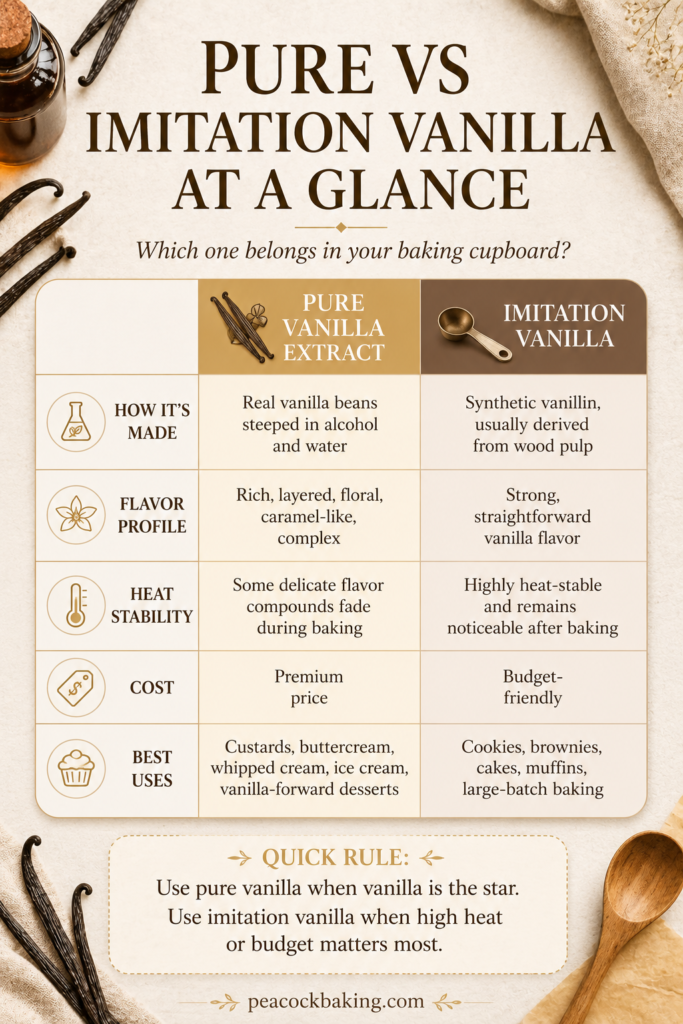
What’s Actually in Your Vanilla Extract?
Pure Vanilla Extract
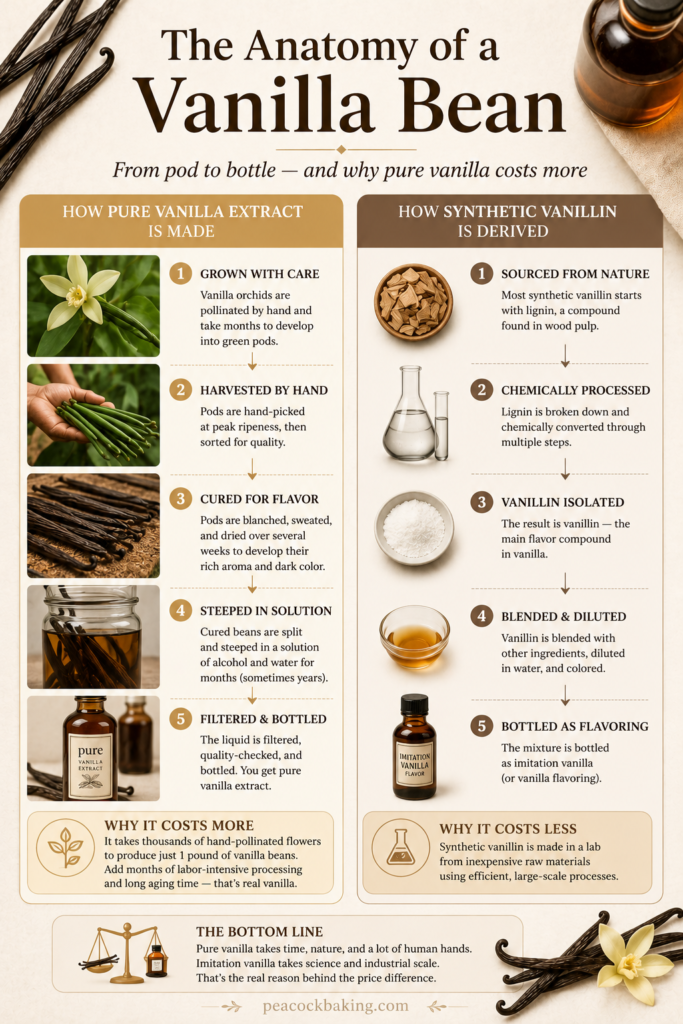
Pure vanilla extract is made by soaking real vanilla beans in a mixture of alcohol and water. In the US, for a product to legally be labeled “pure vanilla extract,” it has to meet specific standards — including a minimum quantity of vanilla beans per gallon of liquid and an alcohol content of at least 35%. That’s it: beans, alcohol, water.
What makes pure vanilla so special is its complexity. Real vanilla beans contain hundreds of aromatic compounds, which is why the flavor is described as layered — floral, caramel, slightly smoky, and warm all at once. When you smell a good pure vanilla extract, it smells like an actual vanilla bean, not a candle.
Imitation Vanilla Extract
Imitation vanilla (sometimes labeled “vanilla flavoring”) is made with synthetic vanillin — an artificial compound that mimics the primary flavor molecule in real vanilla. Synthetic vanillin is often derived from wood pulp, and while it captures that core vanilla note, it doesn’t replicate the full depth of the real thing. Some imitation vanillas also contain added coloring, so the liquid can look darker than pure.
The big upside? Cost. Imitation vanilla is significantly cheaper per ounce than pure, which matters when you’re baking in large batches or just stocking a beginner’s pantry. It’s also got a strong, punchy “vanilla” flavor that many people associate with boxed cake mixes and classic American cookies — there’s a certain familiarity to it that’s genuinely appealing.
What About Vanilla Essence?
You’ll often see “vanilla essence” on the shelves, particularly in the UK. This is typically the same thing as imitation vanilla — it’s a diluted artificial vanilla flavoring rather than a true extract. If a recipe calls for vanilla extract and you only have essence, you can use it, but you may want to add a little extra to get the same intensity of flavor.
Does Pure Vanilla Actually Taste Better?
Here’s where things get genuinely interesting. In blind taste tests — including those done by well-known food publications — tasters could often identify the richer, more complex flavor of pure vanilla in no-bake and low-heat preparations. Whipped cream, buttercream frosting, custard, ice cream: these are all places where the subtlety of pure vanilla shines through.
But in cookies baked at 350°F? The results were far murkier. Many of the delicate aromatic compounds in pure vanilla break down at high temperatures, which means a significant portion of that complexity you paid for simply evaporates in the oven. Synthetic vanillin, on the other hand, is very heat-stable — it holds its flavor through baking, meaning imitation vanilla sometimes tastes more vanilla-forward in cookies and brownies than pure extract does.
This isn’t a knock on pure vanilla. It’s just useful information that changes how you shop.
When to Use Pure Vanilla Extract
Pure vanilla is worth every penny when the flavor has nowhere to hide. If the vanilla is a star ingredient and the preparation is gentle, you’ll taste the difference.
The best applications for pure vanilla extract include:
- Whipped cream and homemade buttercream — these are served cold or at room temperature, so every aromatic note comes through. A good pure extract makes your no-churn vanilla ice cream taste genuinely bakery-quality.
- Custards, pastry cream, and puddings — gently heated and typically the main event, these deserve the real thing.
- Simple sponge cakes and pound cakes — when the batter itself is delicate and unfussy, good vanilla rounds out the flavor in a way imitation can’t quite replicate. A classic yellow sheet cake is a perfect example.
- No-bake cheesecakes and cream-based desserts — anywhere the vanilla is essentially raw in the final product.
If you’re making a banana cream pie with a vanilla pastry cream filling, that’s exactly the kind of recipe where pure extract earns its keep.
When Imitation Vanilla Works Just as Well
For a huge category of everyday baking, imitation vanilla is a completely legitimate choice — and in some cases, it genuinely performs better.
Cookies, brownies, snack cakes, muffins, and quick breads all bake at high temperatures where the subtle complexity of pure vanilla gets baked off anyway. The stronger, more stable flavor of imitation vanilla means you’re getting a consistent, clear vanilla hit every time. Your classic oatmeal raisin cookies will taste just as good — possibly better in terms of vanilla presence — made with imitation extract.
Imitation vanilla also makes obvious sense when you’re baking in bulk. If you’re making a double batch of chocolate chip walnut brownies for a school bake sale, there’s no reason to reach for the expensive bottle.
Baking Guide
Pure or Imitation Vanilla?
Find Out What Your Recipe Needs
Answer three quick questions and get a clear recommendation — no guessing in the baking aisle required.
The Best Vanilla Extracts Worth Knowing About
For Everyday Pure Extract
If you want to use pure vanilla as your go-to, look for a straightforward pure extract with a clean label: vanilla bean extractives, alcohol, and water — nothing else. Nielsen-Massey and Penzeys consistently appear in recommendation lists for their balanced, strong vanilla aroma that performs well in both baked and unbaked applications. Watkins pure vanilla is another reliable option that’s widely available and reasonably priced for a pure extract.
Store brands that carry the “pure vanilla extract” label can also be good value — just check that the ingredients list only vanilla, alcohol, and water. Some cheaper “pure” options are actually blended with imitation vanilla, which is worth knowing before you pay the premium.
For Gourmet and Special Occasions
Single-origin or Madagascar bourbon vanilla extracts are the premium tier. Madagascar vanilla beans are known for their rich, creamy, almost caramel-like flavor, and a good Madagascar-based extract is genuinely stunning in a vanilla custard or a simple sponge. These are the extracts worth splurging on when you’re making something that showcases vanilla front and center.
For Budget Baking
Any reputable supermarket own-brand imitation vanilla will do the job reliably for high-heat baking. Look for “vanilla flavoring” or “imitation vanilla extract” — the main ingredient should be vanillin. These are very inexpensive and perfectly good for your everyday cookies, traybakes, and muffins.
How to Substitute Between Pure and Imitation Vanilla
In most baked recipes, pure and imitation vanilla can be swapped 1:1 with no adjustments needed. A teaspoon is a teaspoon. The difference will be subtle enough in a cookie or brownie that you’re unlikely to notice.
The one exception is in no-bake or very lightly cooked applications. If a recipe calls for pure vanilla in something like a mousse or whipped cream and you’re substituting imitation, you may want to use slightly less — imitation vanilla has a more intense, punchy flavor that can tip toward artificial-tasting if you overdo it. Some guides suggest using about ½ to ¾ of the amount called for in delicate, cold preparations.
Going the other direction — using pure vanilla where the recipe calls for imitation — is always fine, though you’re spending more money for potentially little gain in high-heat bakes.
A Word on Storage
Both pure and imitation vanilla last a long time when stored properly. Keep them in a cool, dark cupboard away from the heat of the oven or stovetop — light and heat both degrade the flavor compounds over time. Pure vanilla extract can actually improve with age, similar to wine, and has an indefinite shelf life when stored correctly. Imitation vanilla has a slightly shorter recommended shelf life, typically around four years, though it often lasts longer.
Don’t refrigerate either — the cold can cause the natural compounds to crystallize or the color to change, though this is cosmetic rather than harmful.
The Honest Bottom Line
The vanilla extract debate doesn’t need to be complicated. Use pure vanilla when you’re making something delicate where the flavor is front and center — custards, buttercreams, ice cream, and simple cakes. Reach for imitation when you’re doing high-heat baking in quantity, and don’t feel guilty about it — the science genuinely backs you up.
A smart approach for most home bakers is to keep both on hand: a good pure extract for those special recipes, and an affordable imitation vanilla for everyday cookies and loaves. That way you’re getting the best of both, without paying premium prices every single time you bake.
Continue Baking:
- Baking Substitutions Guide: What to Use When You’re Missing Ingredients — your all-in-one reference when you’re mid-recipe and missing something
- No Churn Vanilla Ice Cream (3 Ingredient Recipe) — a recipe where good vanilla really does make a difference
- The Creaming Method: A Complete Guide to Perfect Cakes and Cookies — master one of the most foundational baking techniques
- Baking Basics: Essential Kitchen Tools Every Beginner Baker Needs — build out your baking setup from the ground up
- How to Measure Ingredients for Baking (The Right Way) — the small habit that makes a big difference in consistency
Which type of vanilla do you reach for most in your baking? Drop a comment below — I’d love to know if you’ve ever done your own taste test!
Want more beginner-friendly baking guides and recipe inspiration? Sign up for the Peacock Baking newsletter and get new posts delivered straight to your inbox.


