As an Amazon Associate I earn from qualifying purchases and sometimes recommend products from other sellers at no extra cost to you. For more details see my disclosure policy and privacy policy.
The creaming method is the backbone of cake and cookie baking, responsible for creating that perfect tender crumb in your favorite yellow cakes and those irresistibly chewy cookies. As one of the fundamental baking basics and techniques, mastering this method will elevate your baked goods from good to exceptional.
When you cream butter and sugar together, you’re not just mixing ingredients – you’re engineering the structure of your baked goods. This process creates tiny air pockets that expand during baking, resulting in light, fluffy textures that define classic recipes like our Yellow Sheet Cake with Chocolate Buttercream.
Common Recipes Using the Creaming Method
The creaming method shines in recipes where a tender, even crumb and light texture are essential. You’ll find this method used in:
Classic butter cakes, including our Yellow Sheet Cake, layer cakes, and pound cakes. These cakes rely on the creaming method to develop their characteristic fine, tender crumb and melt-in-your-mouth texture.

Cookie recipes that call for soft, tender results also depend on proper creaming. This includes sugar cookies, snickerdoodles, and many drop cookie varieties where a balanced texture between chewy and tender is desired.
Quick breads and coffee cakes often use the creaming method to create a cake-like texture that’s more refined than recipes using the muffin method. This technique helps create those perfect tender slices that hold together beautifully when cut.
Specialty holiday bakes like fruitcakes and some traditional European pastries also rely on the creaming method to create their distinctive textures. The thorough incorporation of butter and sugar helps these dense, rich treats maintain their moisture and tender crumb despite being packed with fruits and nuts.
Understanding Room Temperature Ingredients
Starting with room temperature ingredients isn’t just a suggestion – it’s crucial for successful creaming. Cold ingredients won’t blend properly, while too-warm ingredients can lead to greasy, dense results.
Your eggs, milk, and butter should sit at room temperature for about 1-2 hours before baking. This allows for even incorporation and prevents the butter from seizing when liquid ingredients are added. If you’ve ever seen your smooth butter-sugar mixture suddenly become curdled after adding cold eggs, you’ve experienced firsthand why temperature matters.
The Perfect Butter Temperature
The ideal butter temperature for creaming is 65-68°F (18-20°C). At this temperature, the butter is cool but pliable – when pressed with your finger, it should leave an indent while still feeling slightly cool to touch.
Butter that’s too cold won’t cream properly and will leave unmixed chunks in your batter. Too warm, and it won’t hold the crucial air bubbles needed for proper leavening. For reference, when making our popular cake recipes, we always ensure the butter is at this perfect temperature sweet spot.
Sugar Incorporation: The Science Behind the Magic
The sugar incorporation phase is where the magic happens. As sugar crystals cut through softened butter, they create thousands of tiny air pockets – these are essential for proper leavening and texture.
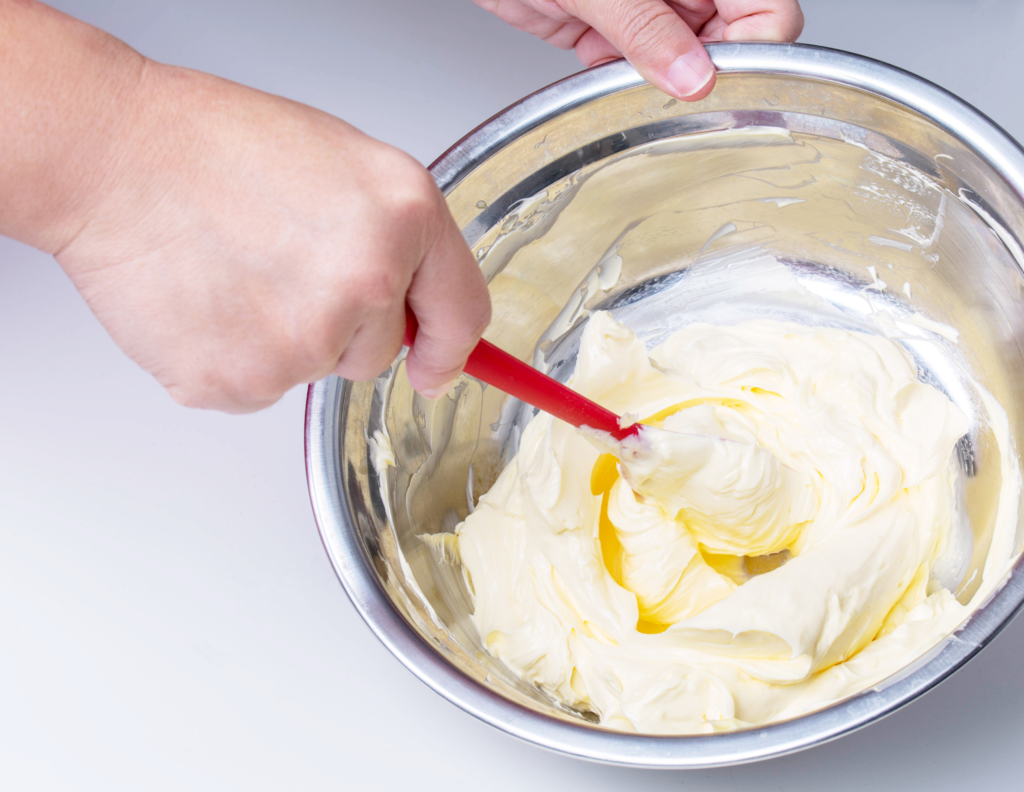
Start with your mixer on medium-low speed for about 30 seconds to combine the butter and sugar. Then increase to medium-high speed and cream until the mixture is light in color and fluffy in texture. The butter should increase in volume by about 50% and take on a pale, almost white appearance.

Timing Guidelines
Proper creaming takes patience. Here’s a breakdown of the timing:
- Initial mixing: 30 seconds on medium-low speed
- Main creaming phase: 3-5 minutes on medium-high speed
- Scraping sides: Every 1-2 minutes
- Final look: Light, fluffy, and nearly white in color
Watch for visual cues rather than relying solely on timing. The mixture should look whipped, light, and fluffy, with no gritty sugar texture when rubbed between your fingers.

Common Problems and Solutions
Curdled Mixture
- Problem: Adding cold eggs to creamed butter and sugar
- Solution: Ensure all ingredients are at room temperature. If curdling occurs, warm the bowl slightly by placing it over warm (not hot) water for a few seconds
Dense, Heavy Results
- Problem: Under-creaming or using too-cold butter
- Solution: Allow proper creaming time and ensure butter is at the correct temperature before starting
Greasy, Collapsed Baked Goods
- Problem: Over-creaming or too-warm butter
- Solution: Stop creaming when mixture is light and fluffy; don’t let butter get too warm
Uneven Texture
- Problem: Not scraping bowl sides during creaming
- Solution: Stop mixer and scrape sides every 1-2 minutes to ensure even incorporation
The creaming method might seem simple, but mastering its nuances will transform your baking. Whether you’re making a classic Yellow Sheet Cake or experimenting with new recipes, these principles will help you achieve consistent, professional results every time.