
As an Amazon Associate I earn from qualifying purchases and sometimes recommend products from other sellers at no extra cost to you. For more details see my disclosure policy and privacy policy.
There’s something wonderfully forgiving about a cobbler. Unlike a pie with its precise pastry ratios or a tart that demands a perfect edge, a cobbler is all about the fruit — and whatever fruit you’ve got is usually the right starting point. That said, some fruits genuinely shine in a cobbler more than others, and knowing which ones to reach for (and when) makes the difference between a filling that’s jammy, saucy, and deeply flavoured versus one that turns watery or overly sweet.
This guide covers the best fruits for cobbler across every season, from peak summer peaches to the frozen berry bags that carry you through winter. Whether you’re a beginner reaching for your first baking dish or a seasoned baker looking to branch out beyond the classics, you’ll find plenty of ideas here for every time of year.
What Makes a Fruit Great for Cobbler?
Not every fruit behaves the same way under heat, and understanding the basic qualities to look for will help you pick wisely — and get creative with combinations.
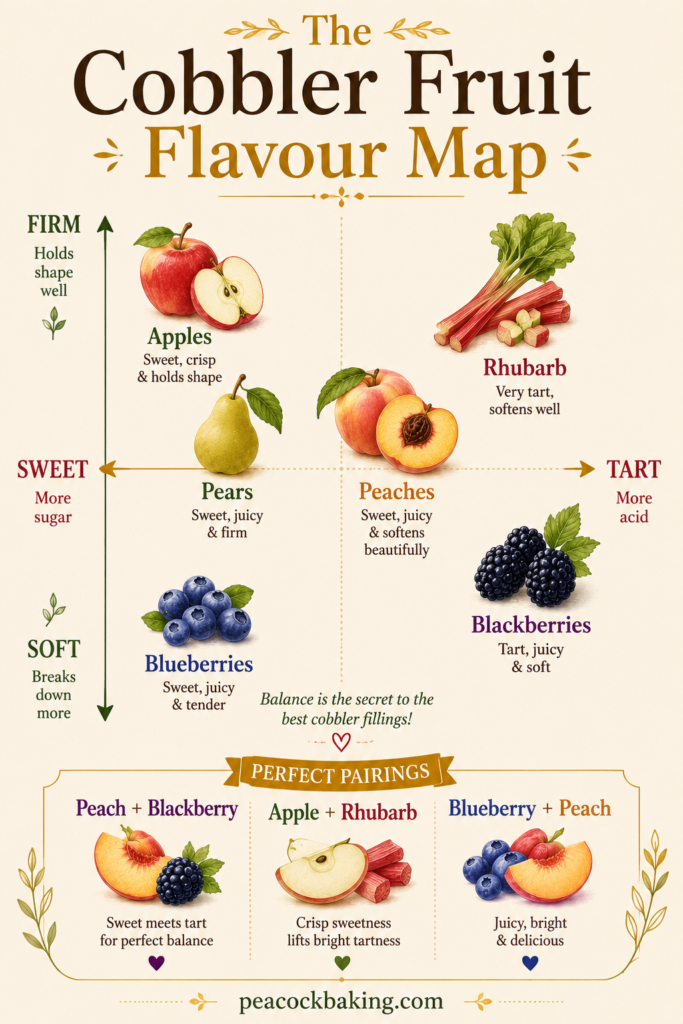
The ideal cobbler fruit hits a balance of three things: sweetness, acidity, and structure. You want enough natural sugar to create a jammy, syrupy filling, enough tartness to keep it from becoming cloying, and enough body so it doesn’t completely dissolve into mush beneath the topping. A fruit that ticks all three boxes — like a perfectly ripe peach — is why some cobblers become legendary.
Juiciness Is a Feature, Not a Bug
One thing that confuses newer bakers is the amount of liquid a cobbler filling produces. With a juicy fruit like peaches or blueberries, you’ll often find the filling bubbling up around the topping as it bakes, and that’s exactly what you want. Those fruit juices soak into the bottom of the biscuit or batter topping, creating that gorgeous slightly-soaked layer that makes cobbler so satisfying. If you’ve never made one before, check out the cobbler topping guide for a breakdown of the three main topping styles and how each interacts with the filling.
Texture After Baking
A fruit that holds its shape after 40 minutes in the oven gives you pleasant, distinct pieces in every spoonful. Firmer fruits — apples, nectarines, pears — do this well. Softer fruits like raspberries or very ripe peaches will break down more, creating a smoother, saucier filling. Neither is wrong; they just give you different results, and knowing which texture you prefer helps you choose.
The Sweetness-Tartness Balance
This is the element most worth thinking about. Very sweet fruits on their own (think ripe mango or very sugary canned peaches) can make a cobbler that tastes one-dimensional. Adding something tart — rhubarb, sour cherries, blackberries, a squeeze of lemon — lifts the whole thing. This is why classic combinations like strawberry-rhubarb or peach-blackberry work so well: the contrast keeps every bite interesting.
Spring: Bright and Tart to Wake Up the Season
Spring is the trickiest time of year for cobbler fruit because true stone fruit season hasn’t arrived yet, and the berry season is only just beginning. But that doesn’t mean you’re without options — it just means you lean into the season’s own character: bright, sharp, and a little lighter than the richness to come.
Strawberry and Rhubarb
This is the iconic spring pairing, and for good reason. Rhubarb has an almost mouth-puckering tartness that would be overpowering on its own, but paired with the floral sweetness of early strawberries it becomes something really special. The two fruits also complement each other texturally — rhubarb softens into jammy strands while the strawberries stay a little more intact.
If you’ve only ever used rhubarb in a crumble or pie, a cobbler is a brilliant way to try it. The biscuit-style topping absorbs all those tart, rosy juices beautifully. Use roughly two-thirds rhubarb to one-third strawberries, taste the filling before it goes in the oven, and sweeten to your preference — rhubarb varies enormously in tartness depending on the variety and how early in the season it’s harvested.
Early Berries and Bridging the Gap
In the UK and many parts of the US, local strawberries start appearing at farmers’ markets from late May or early June, and they’re worth waiting for — the flavour is incomparably better than imported fruit. If you’re somewhere that gets early blueberries or gooseberries, a simple berry cobbler with a handful of mixed fruits makes a lovely light pudding.
For the weeks before local fruit is available, frozen peaches or frozen mango are genuinely excellent options. Don’t let anyone tell you frozen fruit is a compromise — properly frozen fruit is picked at peak ripeness and can give you a better result than fresh fruit that’s been shipped long distances. You’ll just want to use a little extra thickening agent (cornflour works well) because frozen fruit releases more liquid as it thaws during baking. For a deep dive into how fresh, frozen, and canned peaches compare, the fresh vs frozen vs canned peaches guide covers everything you need to know.
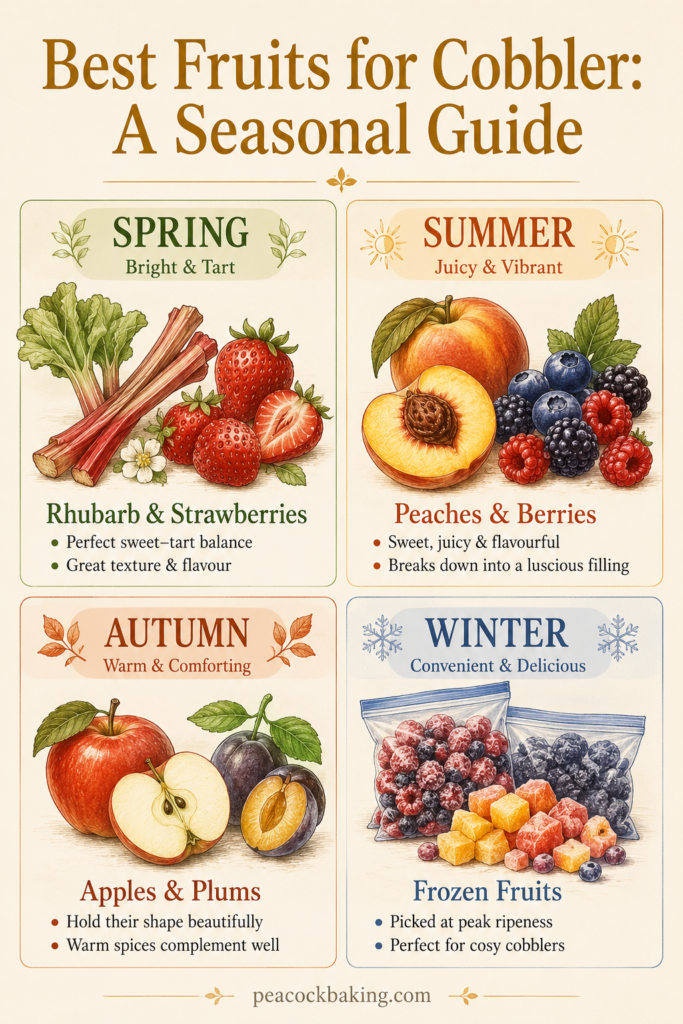
Summer: Peak Season, Peak Cobbler
Summer is when cobbler really comes into its own. From late June through to early September, you have access to the best cobbler fruits in their prime — and the hardest decision is often just which one to make first.
Peaches: The Classic Choice
If there’s one fruit most associated with cobbler, it’s the peach. Southern American peach cobbler is practically a cultural institution, and it’s earned that status. A perfectly ripe peach has everything you want in a cobbler fruit: sweetness that intensifies under heat, a gentle natural tartness, and a texture that softens into lush, silky pieces without completely falling apart.
The key is ripe fruit. An underripe peach is firm and flavourless even after baking, and no amount of sugar will fix that. You want peaches that yield slightly when pressed and smell fragrant at the stem end. If you can get them from a local farm shop or farmers’ market in late July or August, do — they’re a completely different experience from supermarket peaches. And if you’ve got leftover peaches from a bumper batch, the homemade peach cobbler with whipped cream recipe is a brilliant place to start.
Mixed Berry Cobbler
A mixture of blackberries, blueberries, raspberries, and strawberries is arguably the most visually stunning cobbler you can make, and the flavour is just as good as it looks. Each berry brings something slightly different: blackberries add deep, winey flavour; blueberries burst into sweet juice; raspberries give sharpness; strawberries bring a floral sweetness. Together they create a filling that’s complex and layered in a way no single berry quite achieves.
You don’t need equal amounts of each — use whatever you have. A cobbler is one of the most adaptable bakes there is. The fruit-to-topping ratio matters more than the exact combination, so aim for around 700–900g (roughly 1.5–2 lbs) of total fruit for a standard 9×13-inch dish.
Stone Fruit Medleys
Peaches, plums, cherries, apricots, and nectarines are all in season together for a glorious few weeks in midsummer, and mixing them is one of the great pleasures of seasonal baking. Stone fruit medley cobblers have a complexity that single-fruit cobblers sometimes can’t match — a sweet-tart depth that comes from layering similar but distinct flavours together.
Apricots deserve a special mention here. They’re often overlooked in favour of their flashier stone fruit cousins, but in a cobbler they become beautifully jammy with a honeyed tartness that pairs especially well with a vanilla or almond note in the topping. If you’ve never tried an apricot cobbler, summer is the time.
Autumn: Cosy, Spiced, and Deeply Satisfying
As the weather shifts and lighter summer puddings give way to the craving for something more substantial, cobbler shifts with it. Autumn fruit tends to be firmer, less syrupy, and much more suited to warm spices — which means autumn cobblers have a character all their own.
Apple Cobbler
Apple cobbler is one of those recipes that proves cobbler isn’t just a summer thing. A good baking apple — a Bramley in the UK, or a Granny Smith or Honeycrisp in the US — holds its shape wonderfully under heat, giving you pieces with a satisfying bite rather than a uniform mush. The flavour is gently sweet and slightly tart, and it takes to cinnamon, nutmeg, and a little brown sugar the way few other fruits do.
The one adjustment to make with apples is to slice them fairly thin — about 5mm (¼ inch) — so they cook through fully in the time the topping needs. You can also toss them with a little lemon juice and a tablespoon of cornflour to help thicken the small amount of juice they produce. If you’re an apple dessert fan more broadly, the caramel apple tarte tatin and classic apple pie a la mode are both worth bookmarking for the season.
Pears
Pears make an underrated cobbler filling, particularly in early autumn when they’re perfectly ripe. The flavour is subtler than apple — gentle and floral — and the texture softens beautifully in the oven. They work particularly well with blackberries, which are still available into September and October in the UK, and the tartness of the berries lifts what could otherwise be a slightly one-note filling. There’s a dedicated pear and blackberry cobbler recipe on the site if you want a tried-and-tested formula for this combination.
One thing to watch with pears: they vary enormously in their texture and water content depending on variety and ripeness. Conference pears, for example, hold up better in baking than a very ripe Williams pear, which may turn a little mushy. Aim for fruit that’s just ripe — it should yield slightly at the neck but not be soft all the way through.
Late Plums
European plums — the kind that appear in deep purple clusters at farm shops in late August and September — are a joy in cobblers. They have a natural tartness that doesn’t require much added sugar, and they break down into a rich, almost jammy filling that’s beautifully purple and deeply flavoured. Combine them with a touch of cinnamon and a splash of vanilla in the filling and you’ve got something that tastes like autumn in a dish. If you’ve got a glut of plums to use up, this is one of the best things you can make with them.
Winter: Cobblers Don’t Have to Wait for Summer
Here’s one of the most liberating things to know about cobbler: you can make an excellent one in the depths of January. The key is understanding how to use frozen and canned fruit to your advantage.
Frozen Fruit: Your Winter Best Friend
Frozen peaches and frozen mixed berries are consistently recommended by bakers as excellent cobbler fillings, and this isn’t just making do — the results can be genuinely wonderful. Because frozen fruit is usually processed at peak ripeness, the flavour is often more intense than fresh fruit bought out of season.
The practical adjustment to make is accounting for the extra liquid. Frozen fruit releases significantly more juice than fresh as it thaws in the oven, so you’ll want to increase your thickening agent slightly — an extra teaspoon or two of cornflour stirred through the fruit before baking usually does it. You can also let the fruit thaw a little in a sieve over a bowl beforehand and discard some of the excess liquid if you prefer a less saucy filling.
Mango and Tropical Fruits
Winter is actually a lovely time to take cobbler in a more tropical direction. Fresh or frozen mango makes a beautifully sweet, vibrant filling — add a little lime zest and a pinch of ground ginger to the fruit, and swap any almond note in the topping for coconut. The result is something completely different from a classic peach cobbler but just as satisfying in its own way.
Tinned mango in syrup can also work — just drain it well and reduce any added sugar in the filling recipe, since the syrup will contribute its own sweetness. This is a good option if you’re new to baking and want a reliable, fuss-free filling without worrying about fruit ripeness.
Canned Peaches
Canned peaches — in juice rather than syrup if you can get them — are one of the most reliable quick cobbler fillings around. They’re pre-softened, reliably sweet, and consistently available all year round. Drain and roughly chop them, toss with a little cinnamon and a squeeze of lemon juice to brighten the flavour, and you’ve got a filling ready in minutes. They’re particularly useful if you’re new to cobbler and want to focus your attention on getting the topping right rather than managing the fruit.
Fresh vs Frozen vs Canned: What to Use When
It’s worth stepping back and looking at this question directly, because it comes up a lot and the answer isn’t always what people expect.
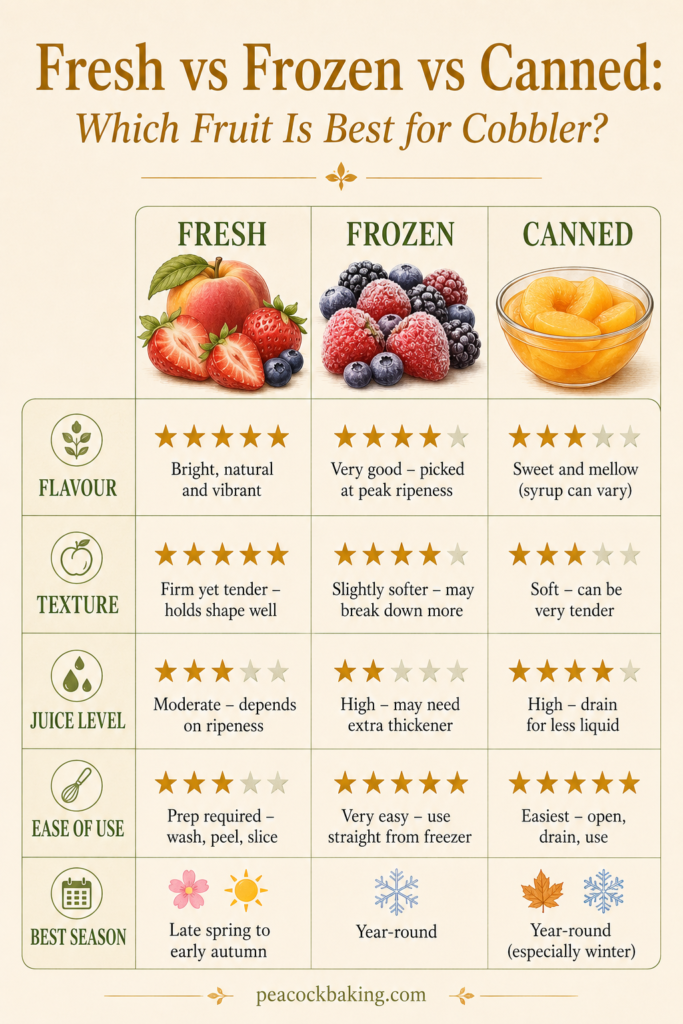
Fresh fruit is the gold standard when it’s genuinely in season. Peak-season fruit gives you the best flavour, the most natural texture, and the right amount of juice. Outside of its season, fresh fruit is often picked underripe and won’t give you the same result.
Frozen fruit is the best choice for out-of-season baking, and for fruits like peaches and mixed berries it can rival fresh in quality. The extra liquid is easy to manage with a little cornflour. Don’t thaw before using unless a recipe specifically asks for it — adding frozen fruit straight to the dish means it releases its liquid gradually as the cobbler bakes, which generally gives a better texture.
Canned fruit works well as a convenience option and is particularly reliable for peaches. Use fruit canned in juice rather than syrup where possible, drain it thoroughly, and reduce any added sugar in your recipe. It won’t give you the same bright, fresh flavour as peak-season fruit, but it makes a perfectly good cobbler.
Mixed formats work fine too — some fresh raspberries combined with frozen peaches, for example, or canned cherries topped up with fresh blueberries. Cobbler is a genuinely forgiving bake, and the flexibility is part of what makes it so appealing.
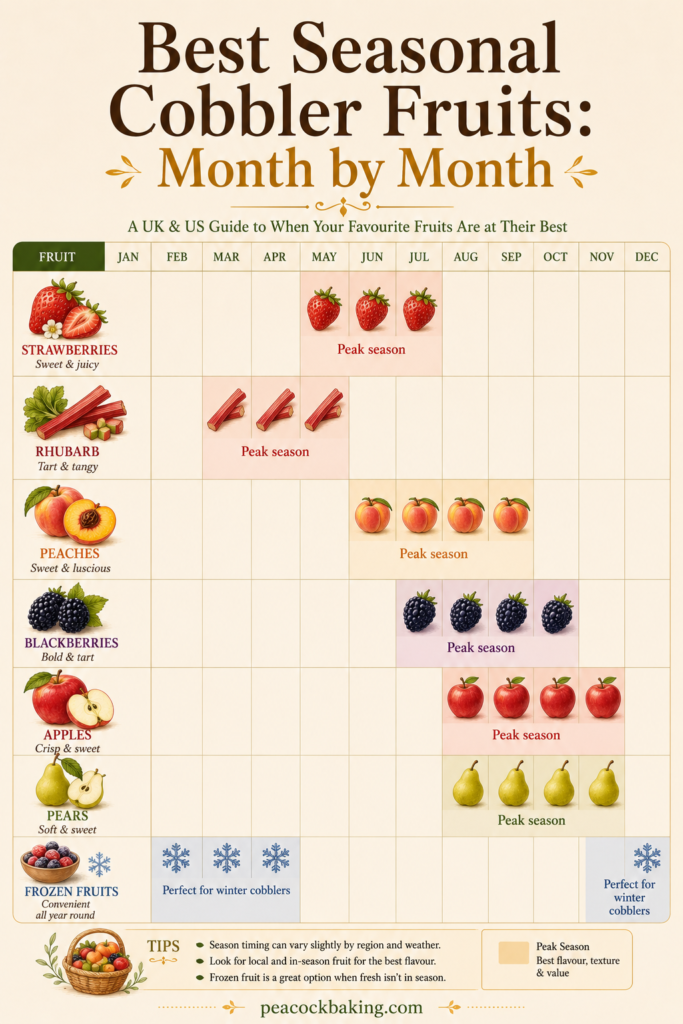
Quick Reference: Best Cobbler Fruits by Season
Tips for Getting Your Cobbler Filling Right
Even with the best fruit, a few small decisions make a big difference in the final result.
Taste before you bake. Mix the fruit with the sugar and any spices, give it a stir, then taste a little piece. Adjust the sweetness or add a squeeze of lemon if you need more acidity. Once the cobbler is in the oven, you can’t change the filling.
Don’t skip the thickener. A tablespoon or two of cornflour (or arrowroot) stirred through the fruit helps create a glossy, jammy sauce rather than a watery pool. This is especially useful with very juicy fruits like berries and peaches, and essential when using frozen fruit.
Let it rest. A cobbler fresh from the oven will look very liquidy — the filling needs 10–15 minutes to settle and thicken slightly before you serve it. Serve it too soon and it’ll be runny; give it a little time and you’ll get that gorgeous scoopable texture.
Season the fruit. A tiny pinch of salt stirred through the fruit filling might sound strange, but it genuinely amplifies the flavour. A little lemon or orange zest does the same thing — it lifts the fruit and makes the whole filling taste more vibrant.
Conclusion
The best fruit for cobbler is really whatever’s ripest, most abundant, and in season where you are. But having a seasonal roadmap helps you plan ahead, make the most of what’s available, and understand why certain combinations work so beautifully together. Peaches in summer, strawberry-rhubarb in spring, apple with spices in autumn, and frozen berries in winter — cobbler is one of those rare bakes that earns its place on the table every month of the year.
If you’re new to cobbler altogether, start with the cobbler, crisp, or crumble guide to get familiar with the differences between these similar bakes — then come back here when you’re ready to choose your fruit. And if you’re already a cobbler convert, have a look at the cobbler topping guide for ideas on mixing up your topping style to suit different fillings.
Whatever fruit you choose, you’re in good hands. Cobblers are some of the most enjoyable bakes there are — low fuss, high reward, and almost impossible to get wrong.
Continue Your Baking Journey
- How to Make the Perfect Cobbler Topping (3 Different Styles) — biscuit, batter, or dumpling style: which is right for your fruit?
- Pear and Blackberry Cobbler — the best autumn cobbler you’ll make this year
- Homemade Peach Cobbler with Whipped Cream — a classic summer recipe with a simple from-scratch approach
- Fresh vs Frozen vs Canned Peaches for Baking: Which Is Best? — a deep dive into the peach question every baker eventually asks
- Cobbler, Crisp, or Crumble? What’s the Difference? — if you’re still working out which bake is which, start here
What’s your favourite cobbler fruit or combination? Drop it in the comments — I’m always on the lookout for new seasonal ideas to try!
Enjoyed this post? Sign up to the Peacock Baking newsletter for seasonal baking inspiration, recipe tips, and new posts delivered straight to your inbox.


