
As an Amazon Associate I earn from qualifying purchases and sometimes recommend products from other sellers at no extra cost to you. For more details see my disclosure policy and privacy policy.
You’ve found a gorgeous peach cobbler recipe, you’re ready to bake — and then you stare down three options at the store: fresh peaches piled high in a seasonal display, bags of frozen slices in the freezer aisle, and tins of canned peaches on the shelf. Which one should you grab? The honest answer is that it depends on the recipe, the season, and what you’re prioritizing — but there’s a clear winner for most bakes, and knowing why makes you a smarter baker all round.
This guide breaks down everything you need to know about using fresh, frozen, and canned peaches in baking: how they behave in the oven, where each one shines, and the simple tips that make all three work beautifully.
Why the Type of Peach Actually Matters in Baking
Peaches are a high-moisture fruit, which means the way they’re processed before they reach your kitchen has a big impact on your finished bake. A peach that’s already been softened by heat behaves very differently in the oven than one that goes in raw. Texture, sweetness, liquid release, and even flavour all shift depending on which form you choose.
For fruit pies, cobblers, crumbles, and crisps, this matters a lot. The filling needs to cook down without turning to mush, and the liquid needs to be controlled — otherwise you end up with a soggy bottom or a watery mess under your topping. Getting the right peach for the right recipe isn’t fussy; it’s just smart.
A Quick Note on Seasonal Variation
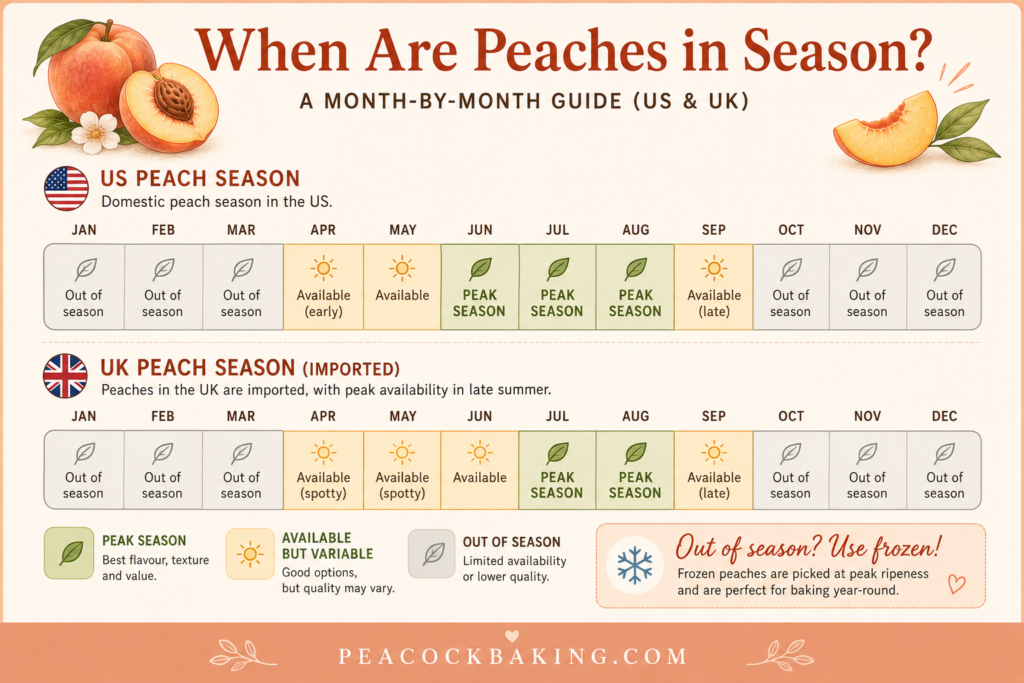
One of the biggest complicating factors with fresh peaches is that they’re only truly great for a short window of time. If you’re in the US, peak peach season runs roughly from June through August, depending on your region. In the UK, you’re largely relying on imported fruit, which is often picked before peak ripeness to survive the journey. This variability in fresh peaches is exactly why frozen and canned options have become so popular — and so useful — in baking.
Fresh Peaches for Baking
When fresh peaches are in season and properly ripe, they’re genuinely hard to beat. They bring a bright, fragrant flavour and a natural texture that’s satisfying in baked desserts — soft enough to yield to a spoon but still holding a bit of bite. The key phrase there is “in season,” because an out-of-season peach that’s been sitting in cold storage is a very different ingredient.
The challenge with fresh peaches is their variability. Depending on where you buy them and when, they can range from barely ripe and tough to overripe and almost syrupy. That variability means you sometimes need to adjust the sugar and thickener in your recipe — more on that in a moment.
How to Prep Fresh Peaches for Baking
Peeling fresh peaches is easy once you know the blanching trick. Score a shallow X in the bottom of each peach, drop them in boiling water for 30–60 seconds, then transfer straight to an ice bath. The skins slip right off. From there, halve, remove the stone, and slice to your desired thickness.
Because fresh peaches release variable amounts of juice, it’s worth tasting them before you bake. If they’re very sweet and juicy, you can reduce the sugar in your recipe slightly and bump up your thickener — cornstarch (cornflour in the UK) is the standard choice for fruit fillings. For every cup of sliced peaches, you’ll typically want about a tablespoon of cornstarch for a pie or cobbler filling.
When to Choose Fresh
Fresh peaches are the best choice for galettes, rustic tarts, and upside-down cakes where the fruit is more exposed and you want a natural, distinct texture. They also work wonderfully in mixed-fruit bakes — think peach and raspberry crumble — where the peaches don’t need to carry the full flavour load. If you’re baking in peak summer and you have access to ripe, fragrant peaches, use them. They’re genuinely special.
Frozen Peaches for Baking
Frozen peaches are consistently the most recommended option among bakers and recipe developers for pies, cobblers, and crumbles — and for good reason. They’re picked and processed at peak ripeness, sold already peeled, pitted, and sliced, and they go into the oven raw rather than pre-cooked. That last point is what makes them so good: raw fruit holds its structure better as it bakes, giving you a filling with real texture rather than a soft, homogenous mush.
The flavour of frozen peaches is also reliably good. Because they’re frozen quickly after harvest without sitting in syrup or juice, you get vivid, genuine peach flavour that makes a strong stand-in for fresh — especially in the months when fresh peaches are either out of season or underwhelming.
How to Use Frozen Peaches in Baking
The most important step is thawing and draining. Some recipes suggest baking from frozen, which does work, but it extends your baking time by 10–15 minutes and releases a significant amount of extra liquid into your filling. For most bakes, it’s worth taking the extra time to thaw the peaches completely in a colander over a bowl, then patting them dry with paper towels before using them.
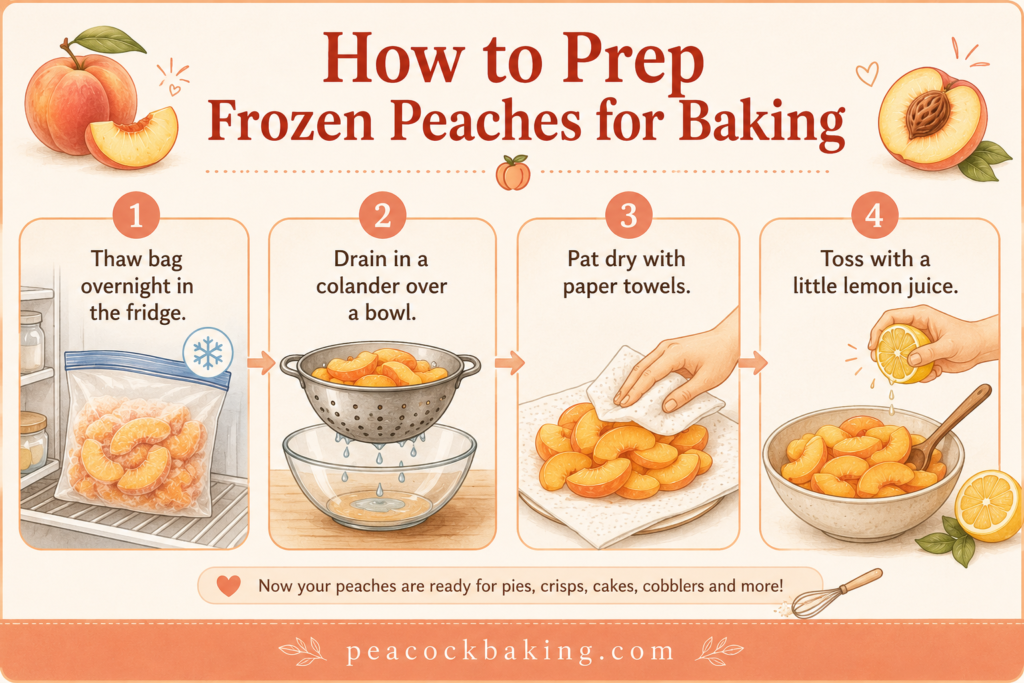
Don’t be alarmed if your thawed peaches look a little discoloured or brownish — that’s harmless oxidation, not spoilage. A quick toss with a little lemon juice before baking will slow the browning and add a nice brightness to the flavour. After that, use them exactly as you would fresh: in your filling with sugar, thickener, and any spices your recipe calls for.
When to Choose Frozen
Frozen peaches are the best all-round choice for year-round baking. They’re ideal for homemade peach cobbler, peaches and cream crumble bars, pies, and any bake where a structured, well-textured filling matters. They’re also the most convenient option for mid-week baking when you want to pull ingredients straight from the freezer.
Canned Peaches for Baking
Canned peaches divide opinion in the baking world, but the reality is nuanced. The key issue is that canned peaches are already cooked as part of the canning process, which means they go into the oven with a head start and can easily go from tender to mushy before your bake is finished. For pies and cobblers, where the filling needs to hold up, this is a real limitation.
That said, canned peaches have genuine advantages: long shelf life, low cost, consistent sweetness, and zero prep needed. If you’re making a quick weeknight bake or a recipe specifically designed for canned fruit, they can absolutely work.
Navigating the Sweetness
Canned peaches packed in heavy syrup are significantly sweeter than fresh or frozen, which can throw off the sugar balance in a recipe written for raw fruit. The better choice for baking is peaches canned in juice or water — the flavour is cleaner and it’s much easier to control the sweetness of your finished dish. If you only have syrup-packed peaches, rinse them gently after draining.
Regardless of the packing liquid, always drain canned peaches very thoroughly and pat them dry with paper towels before adding them to your filling. The excess liquid is the enemy of a good crust or crumble topping, and a few extra minutes of draining makes a real difference.
When Canned Peaches Work Well
Canned peaches are best suited to recipes where texture is less critical — think peach sauce, peach upside-down cake, or any bake with a batter poured over the fruit rather than a pastry crust underneath. They’re also a perfectly respectable pantry shortcut for quick desserts when you need something on the table fast. If you want something more textured, opt for frozen.
Head-to-Head: Texture, Flavour, and Convenience
It helps to see the three options side by side for the factors that matter most in baking.
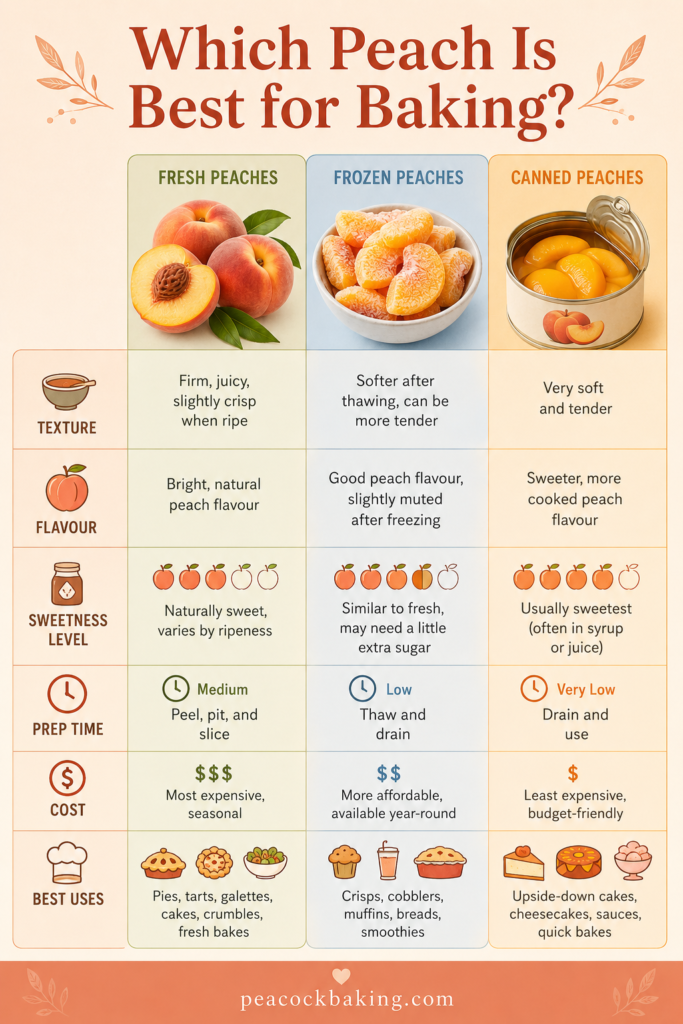
Texture in the oven: Frozen peaches hold their structure best because they go in raw. Fresh peaches in the right state of ripeness are a close second. Canned peaches, already softened by heat, are the most likely to break down — they work, but require careful handling.
Flavour: Fresh, in-season peaches have the edge for pure, fragrant flavour. Frozen peaches are a very close second, with genuine peach taste that’s been preserved at peak ripeness. Canned peaches develop a slightly deeper, jammier flavour from sitting in syrup or juice, which can be appealing but loses some of the fresh brightness.
Convenience and cost: Canned peaches win on both counts — they’re the cheapest option and require no prep. Frozen peaches come in a close second, ready-prepped and available year-round. Fresh peaches require peeling, stoning, and slicing, and they’re at their best (and best value) only during peak season.
Nutrition: This one’s more complicated than you might expect. Studies have found that canned peaches can match or even exceed fresh in certain nutrients including vitamin C and folate, likely because canning happens close to harvest at peak ripeness. That said, the added sugar in syrup-packed cans is a consideration if nutrition is a priority. Choosing canned in juice or water closes the gap considerably.
A Note on Adjusting Your Recipe
Whichever peach you use, you may need to tweak your recipe slightly — and understanding why helps you bake with confidence rather than following instructions blindly.
The main variable is liquid. Peaches release moisture as they bake, and the amount depends on their starting state. Frozen peaches that haven’t been drained well will release the most; fresh juicy peaches come next; well-drained canned peaches release the least. If your filling looks watery after baking, you didn’t use enough thickener. If it’s overly firm and starchy, you used too much.
A good starting point is 1 tablespoon of cornstarch per cup of peaches for a moderately thick filling. If you’re working with very juicy fresh peaches or insufficiently drained frozen ones, go up to 1½ tablespoons. You’ll find more on this in the baking substitutions guide if you ever need to swap one thickener for another.
Sweetness is the other adjustment. Fresh and frozen peaches have similar natural sweetness, so you can usually swap one for the other without changing the sugar in your recipe. Canned peaches in syrup are noticeably sweeter, so reduce the sugar in your recipe by 2–4 tablespoons if swapping them in.
The Verdict: Which Should You Use?
For most peach bakes — cobbler, crumble, crisp, or pie — frozen peaches are the best default choice. They’re reliable, consistent, already prepped, available year-round, and go into the oven raw so they hold their texture beautifully. If you’re planning a peach bake and you don’t have fresh fruit, go straight for frozen.
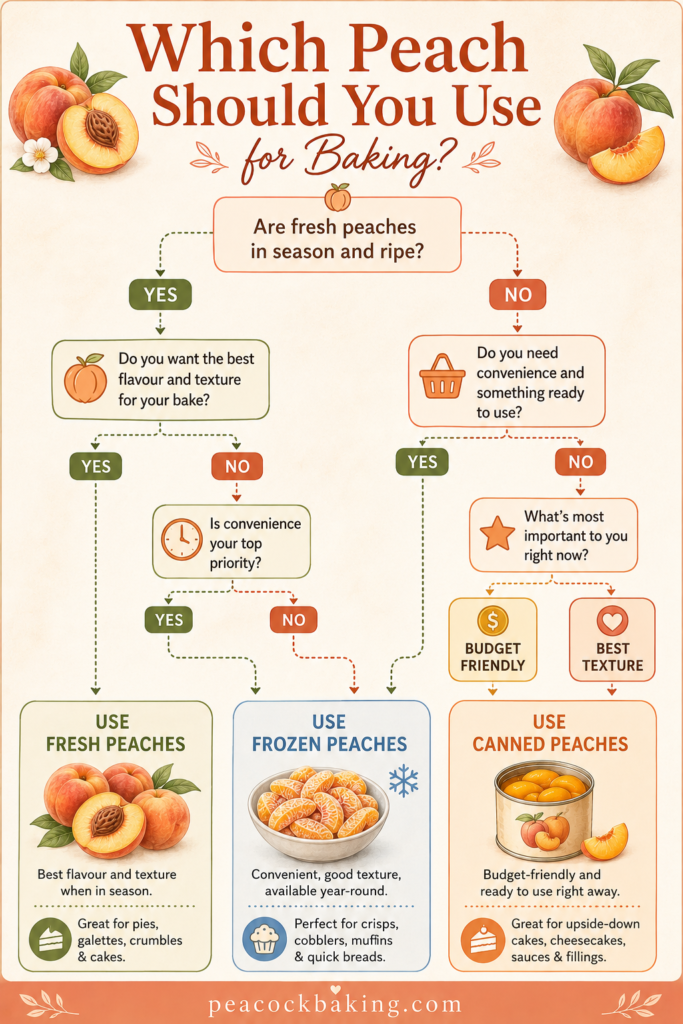
Fresh peaches are the best choice when they’re in season and you have access to ripe, fragrant fruit. During peak summer, nothing beats them — especially for recipes where the peaches are showcased rather than buried under a topping.
Canned peaches are a solid pantry option for quick, convenient bakes or recipes designed specifically for them. Just drain and dry them thoroughly, choose juice-packed over syrup-packed where possible, and expect a slightly softer texture in the finished dish.
If you’re just getting started with fruit bakes, the pear and blackberry cobbler is a great place to practice the technique with a different seasonal fruit — and the principles around fresh versus frozen versus canned apply just as well there.
Wrapping Up
Peaches are one of the most versatile and rewarding fruits to bake with, and knowing how each form behaves gives you the confidence to bake them well in any season. Frozen for reliability and texture, fresh for summer peak-season baking, and canned for convenience — with a few simple tweaks, all three can give you a genuinely delicious result.
Now that you know which peach to reach for, the next step is putting them to work. Our homemade peach cobbler is a great starting point — it’s a classic for good reason, and it works beautifully with frozen peaches year-round.
Continue Your Journey
- Homemade Peach Cobbler with Whipped Cream — the classic recipe to put your peaches to work
- Peaches and Cream Crumble Bars — a brilliant freezer-friendly bake using frozen peaches
- Cobbler, Crisp, or Crumble? What’s the Difference? — if you’re still not sure which fruit dessert to make
- Baking Substitutions Guide — for swapping thickeners and other filling ingredients
- Understanding Baking Temperatures — to make sure your fruit bakes cook through evenly
Which peach do you usually reach for in your baking — fresh, frozen, or canned? Drop a comment below and let us know!
Want more baking tips and seasonal recipes delivered straight to your inbox? Sign up for the Peacock Baking newsletter.


