As an Amazon Associate I earn from qualifying purchases and sometimes recommend products from other sellers at no extra cost to you. For more details see my disclosure policy and privacy policy.
Ganache sounds fancy, but it’s really just two ingredients and a little patience: chocolate and cream. Once you understand the ratios and the technique, you can make a glossy drip for a cake, a whipped frosting, or a batch of truffle centers — all from the same basic method.
What Is Ganache, Really?
Ganache is an emulsion of chocolate and hot cream. The heat from the cream melts the chocolate, and as the two combine, the fat and cocoa solids suspend evenly through the liquid, giving you that smooth, silky texture. Get the ratio and the technique right, and ganache is nearly foolproof. Get it wrong, and you end up with something grainy, broken, or too stiff to pour.
If you haven’t worked with chocolate much before, it’s worth reading through Best Chocolate for Baking: A Complete Guide first — the chocolate you choose changes how much cream you’ll need.
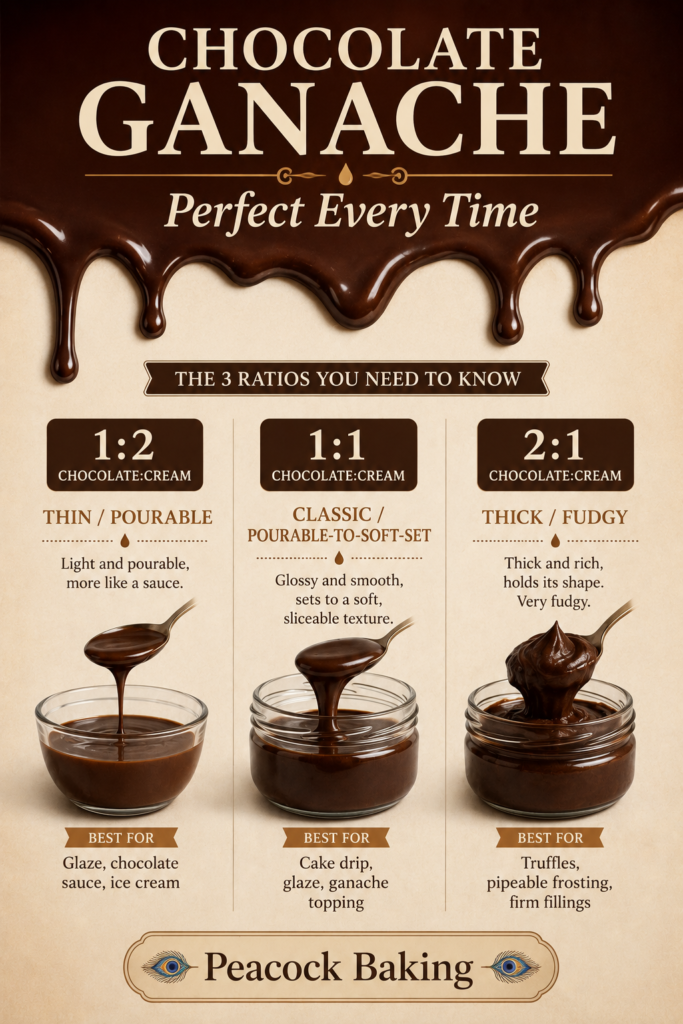
The Ratios You Need to Know
Ganache is all about ratio. Adjust the cream-to-chocolate balance and you get a completely different consistency from the same two ingredients:
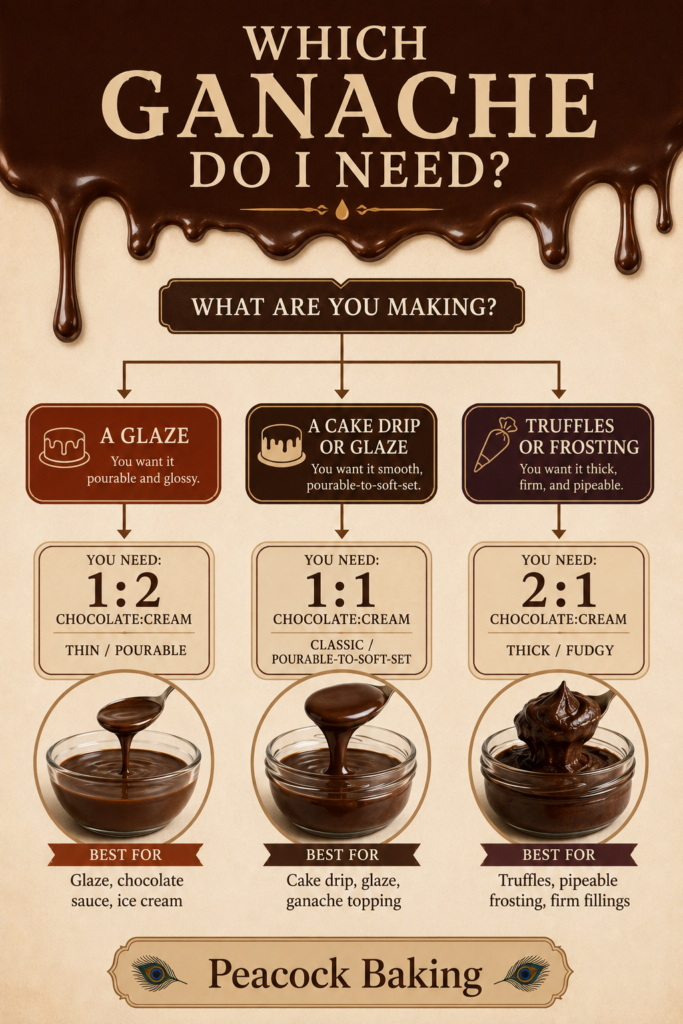
- 1:1 (equal parts chocolate and cream) — the classic pourable ganache. Glossy, smooth, sets to a soft, sliceable texture. This is your go-to for cake glazes and drips.
- 2:1 (chocolate:cream) — thick and fudgy. This is what you want for truffle centers, or a firm frosting you can pipe.
- 1:2 (chocolate:cream) — thin and pourable, more like a sauce. Good for a light glaze or a chocolate sauce for ice cream.
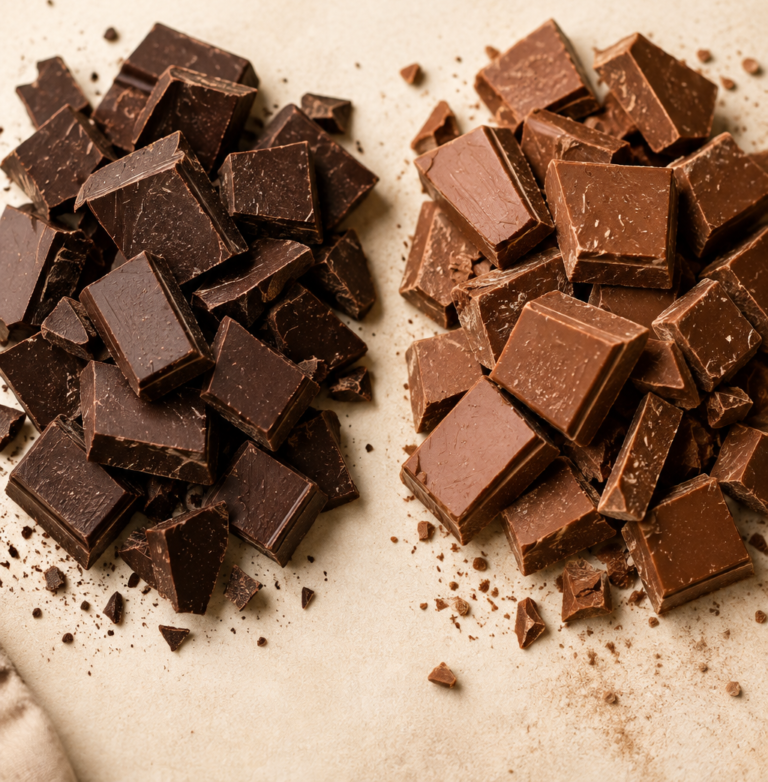
Because white and milk chocolate contain more sugar and fat and less cocoa solid than dark chocolate, they set up softer at the same ratio. If you’re substituting white or milk chocolate into a dark chocolate ganache recipe, cut back on the cream slightly or the ganache may never fully set.
The Method
- Chop your chocolate finely and evenly. Small, uniform pieces melt faster and more evenly, which matters more than people expect — uneven pieces are one of the most common reasons ganache turns grainy.
- Heat the cream just to a simmer — small bubbles at the edge of the pan, not a rolling boil.
- Pour the hot cream over the chopped chocolate in a heatproof bowl, then leave it alone for 2–3 minutes. Don’t stir yet — let the residual heat do the melting.
- Stir gently from the center outward, in small circles, until the mixture is smooth and glossy. Avoid whisking; it introduces air bubbles that dull the shine and can make the texture less silky.
- Let it cool to the consistency you need. Warm ganache pours; ganache cooled to room temperature is spreadable; chilled ganache can be whipped or rolled into truffles.
Troubleshooting
- Grainy or gritty ganache usually means the chocolate scorched or seized from a drop of water getting into the bowl. Keep your equipment completely dry.
- Broken or oily-looking ganache (the fat has separated) can often be rescued by adding a splash of warm cream or milk and stirring gently, or blending briefly with an immersion blender.
- Ganache too thin to set means too much cream for the amount of chocolate — chill it longer, or next time increase the chocolate ratio.
- Ganache too stiff to pour means too little cream — warm it gently over a double boiler (why every baker needs one) and loosen with a little extra warm cream.
What to Do With It
Once you’ve got a batch of ganache, you’re not limited to one use:
- Warm and pourable — glaze a bundt cake, or use it as a drip on a layer cake like this Triple Layer Chocolate Cake.
- Cooled and whipped — an easy, stable frosting for cakes and cupcakes.
- Chilled and rolled — the base for chocolate truffles, dusted in cocoa powder or dipped in tempered chocolate. If you want that professional snap and shine on dipped truffles, it’s worth learning how to temper chocolate at home.
FAQ
Can I make ganache with milk instead of cream? You can, but it will be thinner and less stable since milk has less fat. It works fine for a thin glaze but won’t whip or hold its shape as well.
Why did my ganache seize? A few drops of water getting into melting chocolate is the most common cause. Make sure your bowl, spoon, and the top of your double boiler are completely dry.
How long does ganache keep? Store it covered in the fridge for up to a week, or freeze it for up to three months. Bring it back to room temperature (or warm gently) before using.