As an Amazon Associate I earn from qualifying purchases and sometimes recommend products from other sellers at no extra cost to you. For more details see my disclosure policy and privacy policy.
You found a recipe you love, then spotted the flour and the sugar. Swapping them sounds simple until your cookies turn into sand or your muffins come out like sweet scrambled eggs.
Low-carb baking works when you treat each swap as a trade. Every ingredient you replace takes something with it, whether that is structure, moisture, browning or sweetness. This cheat sheet gives you the starting ratios, tells you what each swap changes, and shows you how to fix the usual problems.
Use the chart first, then jump to the section you need. Think of it as a starting point to test in your own kitchen, not a promise that every brand behaves the same way.
📋 The Low-Carb Baking Substitutions Chart
Here is every common swap on one page. Ratios are rules of thumb for a first test batch, and brands vary, so always check your package. Gram amounts are approximate.
| Original ingredient | Low-carb swap | Starting ratio | What changes |
|---|---|---|---|
| 1 cup all-purpose flour (about 120 g) | Almond flour | 1 cup (about 96 g) | Denser, moister, browns faster |
| 1 cup all-purpose flour | Coconut flour | 1/4 cup (about 30 g), plus 1 extra egg and extra liquid | Very thirsty, soft and cakey |
| 1 cup sugar (about 200 g) | Erythritol or monk fruit blend | 1 cup, or up to 1 1/3 cups for equal sweetness | Paler color, possible cooling taste |
| 1 cup sugar | Allulose | 1 to 1 1/3 cups | Browns well, softer and moister |
| Honey or maple syrup | Sugar-free syrup | Follow the label, often 1:1 | Thinner, less caramel flavor |
| Gluten (structure) | Xanthan gum | 1/4 to 1/2 tsp per cup of low-carb flour | Holds crumb together, gummy if overused |
| Gluten (bread-style bakes) | Psyllium husk | 1 to 2 Tbsp per cup of flour | Chewy, bendy crumb |
| 1 egg | 1 Tbsp ground flax + 3 Tbsp water | Rest 5 minutes | Dense, nutty, best in muffins and cookies |
| Cow’s milk | Unsweetened almond or coconut milk | 1:1 | Slightly thinner |
| Chocolate chips | Sugar-free chocolate chips | 1:1 | Melt a bit differently |
| Breadcrumbs | Almond flour or crushed pork rinds | 1:1 | Browns quickly, richer |
| Cornstarch (thickener) | Xanthan gum | 1/4 to 1/2 tsp per cup of liquid | Whisk in slowly or it clumps |
One note on carb counting. Net-carb maths depends on the exact brands you buy, so treat any total you work out as a guide only and check your own labels.
🌾 Flour Swaps: Almond, Coconut, Lupin, Flax and Blends
Flour is where most low-carb bakes succeed or fail. Wheat flour has gluten, which builds a stretchy network. None of the replacements do, so you are rebuilding structure with eggs, binders and the right mix of flours.
Almond flour
Almond flour is the easiest place to start. It is made from blanched, finely ground almonds, and it gives cookies, muffins, brownies and quick breads a tender, moist crumb.
Start with a 1:1 swap by volume for a quick bread or muffin. Because almond flour is higher in fat, expect a denser bake that browns faster, so lower the oven by about 25°F and tent with foil if the top darkens early.
Look for “super-fine blanched” almond flour rather than almond meal. The coarser meal makes a heavier, speckled result. If you bake often, a bag of super-fine almond flour is worth keeping in the pantry.
Coconut flour
Coconut flour is a different animal. It soaks up liquid like a sponge, so you cannot swap it 1:1 for anything. A typical starting point is about 1/4 cup (30 g) of coconut flour for each cup of regular flour, plus an extra egg and extra liquid to match.
Let the batter sit for a few minutes before you judge it. Coconut flour keeps thickening as it hydrates, and a batter that looks too wet at first often settles into the right texture. Fine, unscented coconut flour behaves more predictably than coarse, clumpy bags.
For the full method, including the egg and liquid rules and common mistakes, read our coconut flour baking guide for beginners. It goes deeper than this page does.
Lupin, flax and blends
Lupin flour is a protein-rich legume flour that can lighten a bake and add structure. It has a distinct flavor, so many bakers replace only a small portion of the flour with it and taste as they go. It is a good one to test in a single batch before you commit.
Ground flax (flaxseed meal) adds fiber and a nutty note. It works well in muffins, cookies and crackers, and it doubles as an egg replacer when mixed with water.
Blends are often the best answer. A mix of mostly almond flour with a little coconut flour gives you moisture from one and structure from the other. If you want the wider picture of how regular flours behave, our guide to baking flour types, uses and substitutions is a good companion.
🍬 Sugar and Syrup Swaps: Erythritol, Allulose, Monk Fruit and Stevia
Sugar does more than sweeten. It browns, tenderizes, holds moisture and helps cakes rise. So the sweetener you pick changes more than the taste.
This section gives you the quick version. For brand comparisons and the full breakdown, head to our ultimate guide to sugar substitutes for baking.
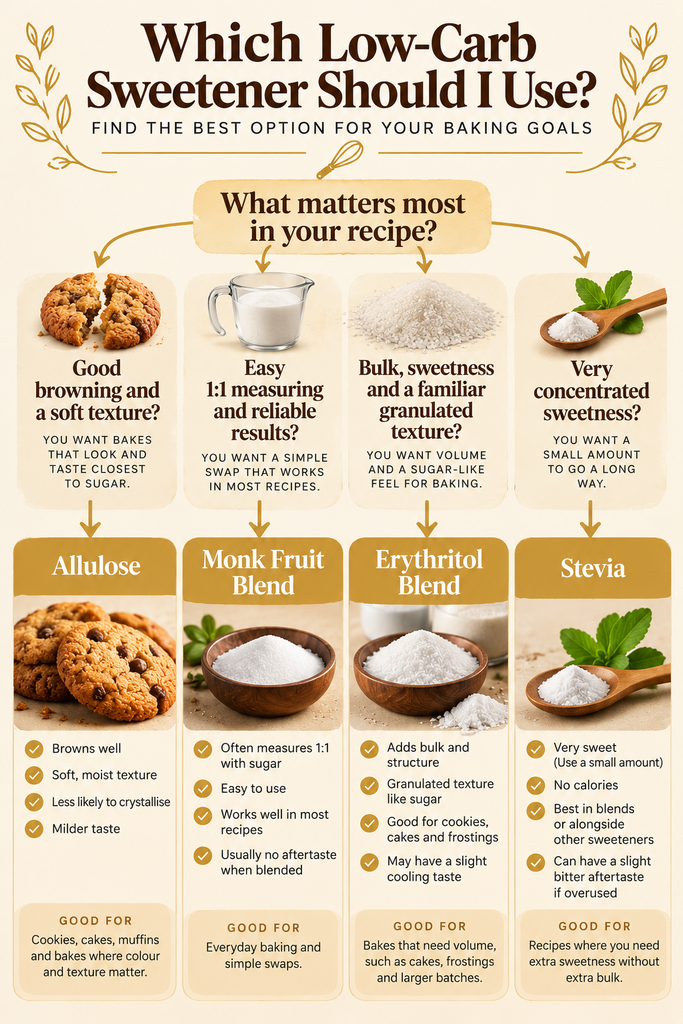
Erythritol
Erythritol is a popular granulated option, but it is only about 60 to 70 percent as sweet as sugar. Many bakers use up to 1 1/3 cups for each cup of sugar when they want equal sweetness.
It does not brown the way sugar does, so bakes come out paler. It can also leave a cooling sensation on the tongue, and it may recrystallize as a baked good cools, which feels gritty. Powdered erythritol dissolves more easily than granulated, so use that for frostings and smooth batters.
Allulose
Allulose is about 70 percent as sweet as sugar and behaves much more like it in the oven. It browns, it keeps bakes soft, and it does not give that cool aftertaste.
Many bakers use 1 to 1 1/3 cups for each cup of sugar and drop the oven temperature by about 10 to 15°F, because allulose browns quickly. It also keeps cookies and cakes moister for longer, which is lovely in brownies and a small trap in anything meant to be crisp.
Monk fruit blends and stevia
Monk fruit is usually sold blended with erythritol or allulose, and the blend is what you actually bake with. Most granulated blends are designed to measure 1:1 with sugar, but read the package, because the claim differs from brand to brand. A reliable granulated monk fruit or erythritol blend is the simplest place to start.
Pure stevia is extremely concentrated, so use only the amount the package recommends. On its own it adds sweetness with no bulk, which means cookies and cakes need extra help from another ingredient to keep their structure.
A quick sweetener strategy
Do not expect one sweetener to do everything. Many recipes work best with a blend, for example allulose for browning and moisture plus an erythritol blend for bulk.
If you are adapting a favorite recipe, you can also trim the total sweetener a little. Our simple formula for how to reduce sugar in any baking recipe shows how far you can go before texture suffers.
🧱 Structure and Binders: Replacing Gluten
Without gluten, a cake can crumble into pieces the moment you slice it. Binders fix that.
Xanthan gum
Xanthan gum is a tiny-quantity ingredient with a big job. It gives batters body and helps them hold air, so your cake rises and stays together.
A widely used rule of thumb is 1/4 teaspoon per cup of low-carb flour for cookies, and up to 1/2 teaspoon per cup for cakes and muffins. Start at the low end. Too much makes bakes gummy or slimy, and you cannot take it back out.
Psyllium husk
Psyllium husk powder creates a chewy, flexible crumb, which is why it shines in bread, pizza dough, wraps and rolls. Typical amounts run around 1 to 2 tablespoons per cup of flour in bread-style recipes.
Mix it with the liquid first and give it a few minutes to gel. It can turn baked goods purple-gray in color, which is harmless, but worth knowing before you panic. Skip it in delicate cakes, where it makes the crumb too heavy.
Eggs and extra eggs
Eggs are your best structural friend in low-carb baking. They bind, add lift and provide moisture. When a recipe falls apart, an extra egg or an extra yolk is often the first fix to try.
For vegan or egg-free versions, one tablespoon of ground flax stirred into three tablespoons of water and rested for five minutes can replace an egg in muffins, cookies and some quick breads. Expect a denser crumb than with real eggs.
Why weighing helps
Low-carb flours vary a lot in how densely they pack. A cup of scooped almond flour can weigh noticeably more than a cup spooned and leveled. If your results are inconsistent, a digital kitchen scale takes the guesswork out. Our guide to measuring baking ingredients the right way explains the method.
🥛 Other Swaps: Milk, Chocolate Chips, Breadcrumbs and Thickeners
Flour and sugar get the attention, but a few smaller swaps trip people up too.
Milk and cream
Unsweetened almond milk or coconut milk swaps 1:1 for dairy milk in most batters. For richer bakes, heavy cream thinned with a little water also works well. Always choose unsweetened versions, since flavored or sweetened cartons add sugar you did not plan for.
Chocolate chips
Regular chips contain sugar, so most low-carb bakers use sugar-free chocolate chips in a 1:1 swap. They tend to hold their shape a little longer in the oven and can taste slightly different, because they are sweetened with sugar alcohols or similar sweeteners. Our sugar-free chocolate chip cookies show them in action, and a bag of sugar-free chocolate chips is an easy pantry staple.
Breadcrumbs
For coating or binding, finely ground almond flour makes a good stand-in for breadcrumbs. Crushed pork rinds and grated Parmesan are also popular, and they brown beautifully. All of these toast faster than regular breadcrumbs, so watch the oven.
Thickeners
Cornstarch and flour thicken sauces, fillings and custards. A pinch of xanthan gum does the same job in low-carb recipes. Sprinkle about 1/4 to 1/2 teaspoon over each cup of liquid while whisking, or blend it in, because it clumps if dumped in all at once.
🔧 Troubleshooting Low-Carb Bakes
Most failures follow familiar patterns. Here is how to read them.
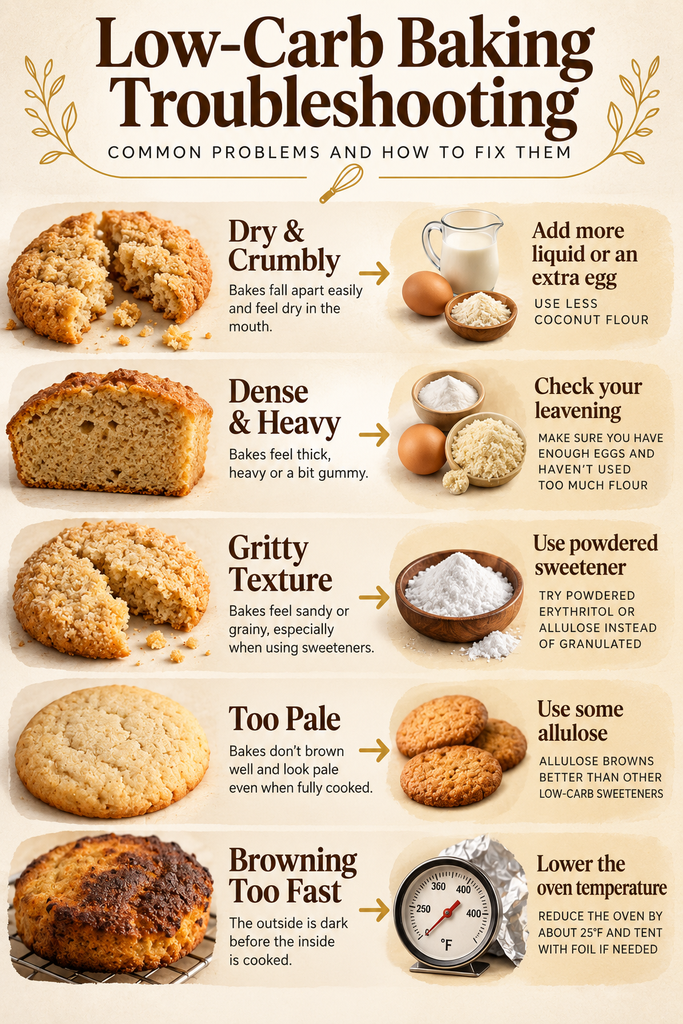
Dense and heavy
This usually means too much almond flour, too little leavening or not enough eggs. Check that your baking powder is fresh (our guide on baking powder vs baking soda shows how), and consider whisking the eggs well before folding in the dry ingredients. Sifting the flour also helps.
Dry and crumbly
Coconut flour is the usual suspect. The fix is more eggs and more liquid, or less coconut flour next time. A little extra fat, such as a tablespoon or two of butter or oil, also adds tenderness. Bakes made with erythritol can dry out as they cool, so check them a few minutes early.
Gritty texture
Grit almost always comes from granulated erythritol that has not fully dissolved. Use a powdered version, blend your sweetener into a finer powder, or switch to allulose. Warming the sweetener with the wet ingredients can help it dissolve.
Cooling aftertaste
That fresh-mint sensation on your tongue comes from erythritol. Use less of it, blend it with allulose or a monk fruit product, or choose a different sweetener altogether for the recipes where you notice it most.
Pale and won’t brown
Erythritol and many other sugar substitutes do not caramelize the way sugar does. Using allulose for part of the sweetener helps, as does a slightly longer bake with the tray moved to the middle or upper rack. Brushing the top with a little melted butter before baking also adds color.
Browning too fast
The opposite problem shows up with almond flour and allulose. Lower the oven temperature, tent the top with foil after 15 to 20 minutes, and bake a little longer. Our guide to baking temperatures explains how oven heat shapes the result.
Adjusting bake time and temperature
As a general starting point, drop the temperature by 10 to 25°F compared with the original recipe and expect the bake to take a little longer. Low-carb batters often look done on the outside before the center has set, so use a toothpick and trust it over the clock.
Let bakes cool fully in the pan before you move them. Low-carb crumbs set as they cool, and cutting too soon is one of the most common reasons for a bake falling apart.
🧪 Two Quick Worked Swaps
Seeing the maths on a simple example makes the chart easier to use.
Swapping a muffin recipe
Say your muffin recipe calls for 1 1/2 cups all-purpose flour, 3/4 cup sugar and 1 cup milk. Replace the flour with 1 1/2 cups almond flour and add 1/2 teaspoon xanthan gum. Swap the sugar for 3/4 cup of a granulated monk fruit blend measured 1:1 per the label, and use unsweetened almond milk for the milk.
Bake about 25°F lower than the original recipe, and check a few minutes early. Expect a denser, moister muffin than the wheat version.
Swapping a cookie recipe
For cookies calling for 2 cups flour and 1 cup sugar, try 2 cups almond flour, 1/2 teaspoon xanthan gum and 1 cup of allulose. Add a pinch of salt and an extra egg yolk if the dough feels crumbly. Chill the dough for 20 minutes before baking, since low-carb cookie dough spreads more than wheat dough.
Cookies firm up as they cool, so leave them on the tray for several minutes after baking. For a full recipe that uses this approach, see our coconut flour chocolate chip cookies.
💡 Quick Rules to Pin on the Fridge
If you remember nothing else from this page, remember these.
- Change one thing at a time when you adapt a recipe, so you know what fixed or broke it.
- Weigh your flours rather than scooping them.
- Never swap coconut flour 1:1 for any other flour.
- Use allulose when you want browning and softness, and an erythritol blend when you want bulk.
- Add binders in small amounts. Xanthan gum and psyllium are powerful.
- Bake lower and slower, then let everything cool before slicing.
- Write down your changes. Your own notes become your best cheat sheet.
🍪 Ready to Bake Smarter
Low-carb baking is less mysterious once you know what each ingredient does. Start with the chart, test one recipe at a time, and keep notes on what worked in your oven with your brands.
Once you are comfortable with the basics, explore the deeper guides linked above, and treat this page as the quick reference you come back to whenever a recipe asks for a swap.